

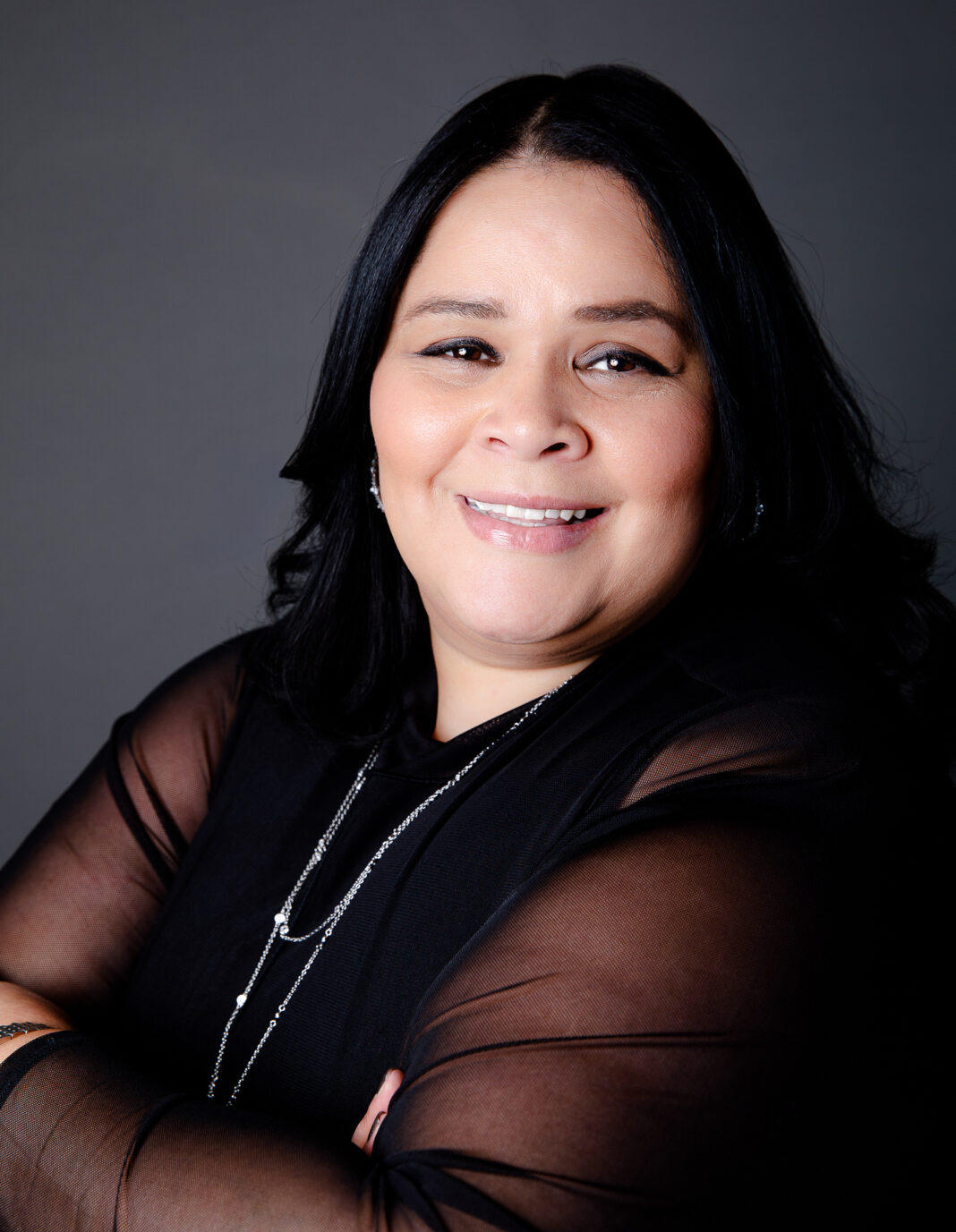

Meet Amber N. Kirk Harvey, a 2026 Chicago Defender Women of Excellence Award and Induction honoree.
For Amber, recognition is communal, historical, and deeply intentional. As the Chief Deputy of Operations and Child Programs for Court Appointed Special Advocates (CASA), Amber’s leadership is shaped by lived experience, guided by faith, and grounded in dignity.
In this interview, Amber reflects on mentorship, sacrifice, unfinished work, and what it truly means to lead with purpose.
Marshelle Sanders: How does it feel to be honored as a 2026 Chicago Defender Women of Excellence recipient?
Amber Kirk-Harvey:
It’s deeply humbling, but also profoundly affirming. The Chicago Defender has always been a sacred institution in our community, one that told our stories when others intentionally ignored us. It defended our humanity.
To be honored by the Defender places me in a lineage, not just a moment. It feels like the community is saying, ” We see the work you’re doing. It’s evolving, but it matters. This recognition connects me to generations of women whose shoulders have lifted others so the work could continue.
I think about women like Michelle Obama, how Black excellence can be rooted in authenticity, intellect, and grace. I think about Illinois State Senator Mattie Hunter, who didn’t just participate in policy but forced reform in criminal justice and health care. I think about my mentor and CEO, Dr. Bonita Carr, who is also a Woman of Excellence. All of this confirms that I’m walking into a powerful legacy and that I’m being called to go deeper and do more.
M.S.: Your work has created measurable change in the community. What specific problem did you identify that compelled you to step into your leadership, and how did you decide your approach needed to be different?
A.K.H.:
My leadership story goes back to a very young age. I was born and raised in Lafayette, Indiana, and I was told, directly and indirectly, that I was not valuable. The systems around me reinforced that message through what they lacked. I didn’t see Black teachers, doctors, lawyers, or administrators until high school.
I grew up in a home with 18 siblings, navigating transitional housing systems that stripped families of dignity. Mental illness went unaddressed. Families were spoken to as if they were the problem. Even the church, especially in the ’90s, became a space where we gathered to talk honestly about both problems and solutions.
I began resisting early. In eighth grade, I helped organize a boycott after a Black student was falsely expelled. In high school, we had what was called the “Black hallway.” If it weren’t for a mentoring program through Purdue University’s National Society of Black Engineers, I wouldn’t have met Black student teachers, toured colleges, or received a scholarship to Bethune-Cookman.
All of that taught me that leadership must be rooted in dignity, respect, and visibility. When people are seen and honored, they become part of the solution. That is the approach I carry into my leadership every day.
M.S.: Leadership often does require sacrifice. What is something that you had to give up or push through that people don’t often see behind your success?
A.K.H.:
What people don’t often see is how much energy it takes to fight for equity while still trying to succeed within inequitable systems. A significant amount of my work has involved explaining, again and again, why current systems don’t work, particularly for older youth in foster care.
These young people are not problems; they are victims. Yet they are pushed into adulthood with minimal support and told to navigate life on their own. I’ve spent years knocking down doors, building partnerships, and dismantling policies that excluded the youth who needed help the most.
I’ve also sacrificed ease. There’s a misconception that leadership comes with comfort. My team will tell you, there are no big “I’s” and little “you’s” with me. I’m in the field, in court, in jails, drafting grants, canvassing, and building programs alongside my CEO. That’s what it takes to move real change forward.
As my grandmother would say, they don’t know the oil. The calm people see comes from faith and servant leadership, not from ease.
M.S.: Impact is more than attention. How do you personally measure success in your work, and what outcomes matter most to you?
A.K.H.:
I measure success by whether people leave systems stronger than when they entered them. Are they more informed, more confident, and more hopeful?
Success looks like youth aging out of foster care with housing, education pathways, community, and a voice. It looks like families are being treated with dignity instead of suspicion. It looks like children see themselves reflected in the programs designed to serve them. It also looks like staff and advocates are growing because someone believed in them.
Ultimately, the outcomes that matter most to me are restored dignity, expanded opportunity, and the interruption of cycles of generational poverty. Those were the things I needed most as a young person, and they are what I am committed to giving back.
M.S.: What moment in your journey shaped the woman you are today, and why?
A.K.H.:
One of the most defining moments in my life was my refusal to be invisible. In high school, after returning from a college tour, I requested my student file. In it, I saw one word: Disrupter.
I was furious. I thought no college would ever look past that. But one of my mentors told me I was looking at it the wrong way. He said colleges aren’t afraid of disruptors; they want to know what you disrupted and how you’ll do it again.
That moment shifted everything for me. I embraced being a disruptor. With the support of my mother, my siblings, and my community, I spent the rest of my high school years challenging everything I believed was unjust.
That mindset followed me into my professional life. In my current organization, I told my CEO I would no longer sit in courtrooms where children had no voice. She asked me how I would disrupt the system using a data-driven plan, and together we built a program for older youth that transformed how they were served.
M.S.: What work still feels unfinished for you, and why does it matter so deeply?
A.K.H.:
The work that feels most unfinished is transforming systems so people no longer have to fight just to be treated fairly. Equity should not require exhaustion.
When we talk about systems, we’re talking about housing, food security, health care, education, and access. People don’t expect overnight change; they want progress. They want to see institutions become places of support, not fear.
My goal is to remove obstacles, scale solutions, and transform systems so survival is no longer the standard. Thriving must be. That is the work I will continue to do.
M.S.: What advice would you give to young women striving for excellence who may be struggling with self-doubt or fear of failure?
A.K.H.:
First, believe that what you’ve experienced is real. If a system wasn’t built for you, your discomfort is not failure; it’s evidence of your leadership.
You don’t need permission to lead. You don’t need to shrink to be accepted. You don’t need to wait until you feel ready. Trust your voice. Honor your story. Remember that you come from women who fought far harder battles so you could stand where you are, and they still stand with you.
And get a mentor. I would not be here without Dr. Bonita Carr. Mentorship changes lives.
M.S: When you’re not working, how do you relax or recharge?
A.K.H.:
I work hard, but I laugh often. I recharge by reconnecting with joy, especially through time with my family. My children remind me why this work matters.
I love reading everything from political nonfiction to romance novels and all the spaces in between. I’ve also committed to quarterly spa time and journaling because I’m at my best when my mind is clear and my spark is strong.
I don’t have just one favorite book, but I’m currently rereading “When the Welfare People Come” by Don Lash. It’s a powerful reflection on race and class in the United States, and it reminds me that when systems enter people’s homes, families often respond from a place of survival. That perspective keeps me grounded in how I show up for communities.
The Chicago Defender Women of Excellence Awards and Induction Ceremony celebrate local African American women who inspire others through visionary leadership, exceptional achievement, and meaningful community service. These honorees exemplify extraordinary stature, poise, and grace.

