
Photo Credit: John Konstantaras / The Associated Press
Marshelle SanderDuring the 2026 Women’s History Month, Chicago took time to honor the women whose brilliance, courage, and leadership shaped not only the city but the nation.
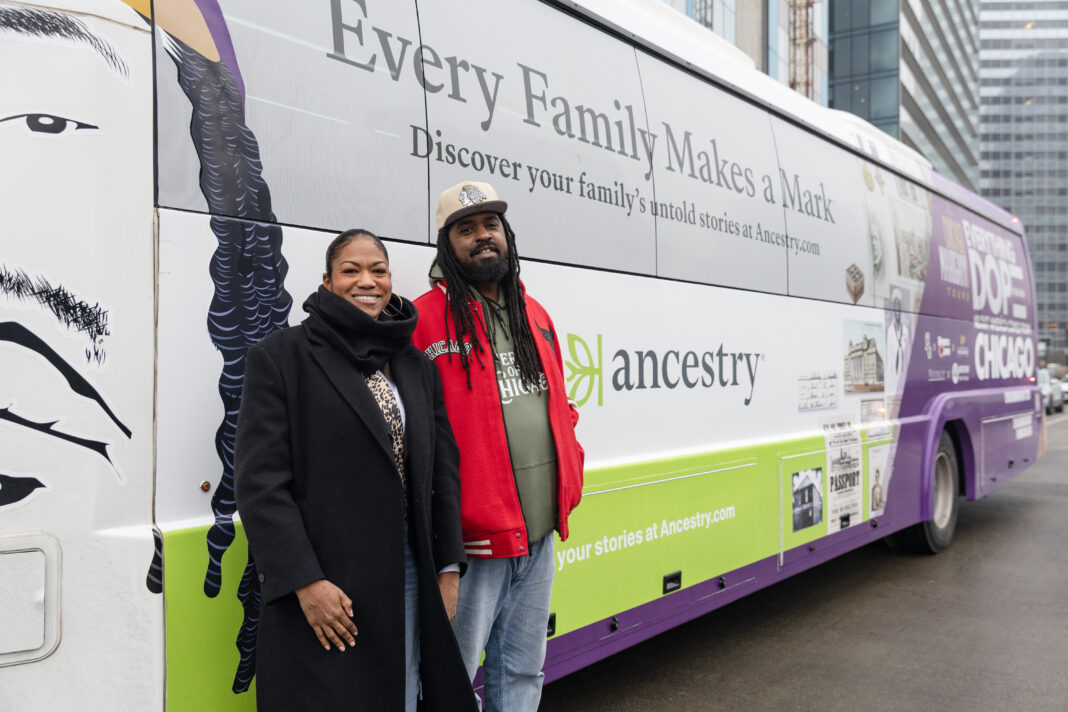
Earlier this month, viral Chicago historian Shermann “Dilla” Thomas and Ancestry Senior Story Producer Nicka Sewell-Smith led a bus tour through neighborhoods and landmarks connected to extraordinary female changemakers, which is still running until Saturday, March 28th, for guests who want to explore and celebrate these remarkable women.
From highlighting the breadth of these women’s impact, the tour shone a spotlight on Black legendary women whose work in education, journalism, music, activism, business, and cultural preservation transformed Chicago and reverberated beyond its borders. Chicago is widely recognized for producing male presidents, activists, artists, and innovators. Yet the stories of many women who helped build the city have too often gone untold.
With over 90 percent of Chicago’s statues dedicated to men, the tour served as both a lively celebration and overdue recognition for women whose contributions deserve public acknowledgment.
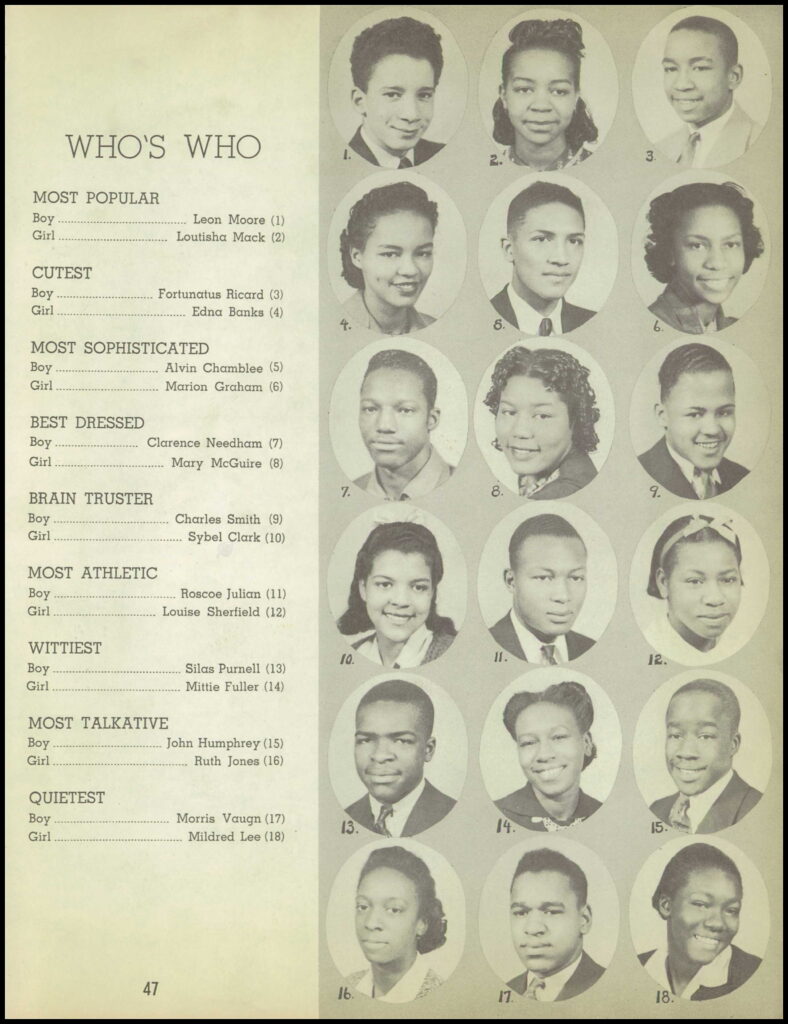
Among the women honored was Dinah Washington, the legendary blues and jazz vocalist born Ruth Jones, whose unmistakable voice helped define an era in American music. With Dilla’s expertise and humorous commentary for each woman, Dilla noted, “Dinah Washington was born Ruth Jones… that’s the incomparable blues singer. Look what she was voted, most talkative. That’s why she became a blues singer.”
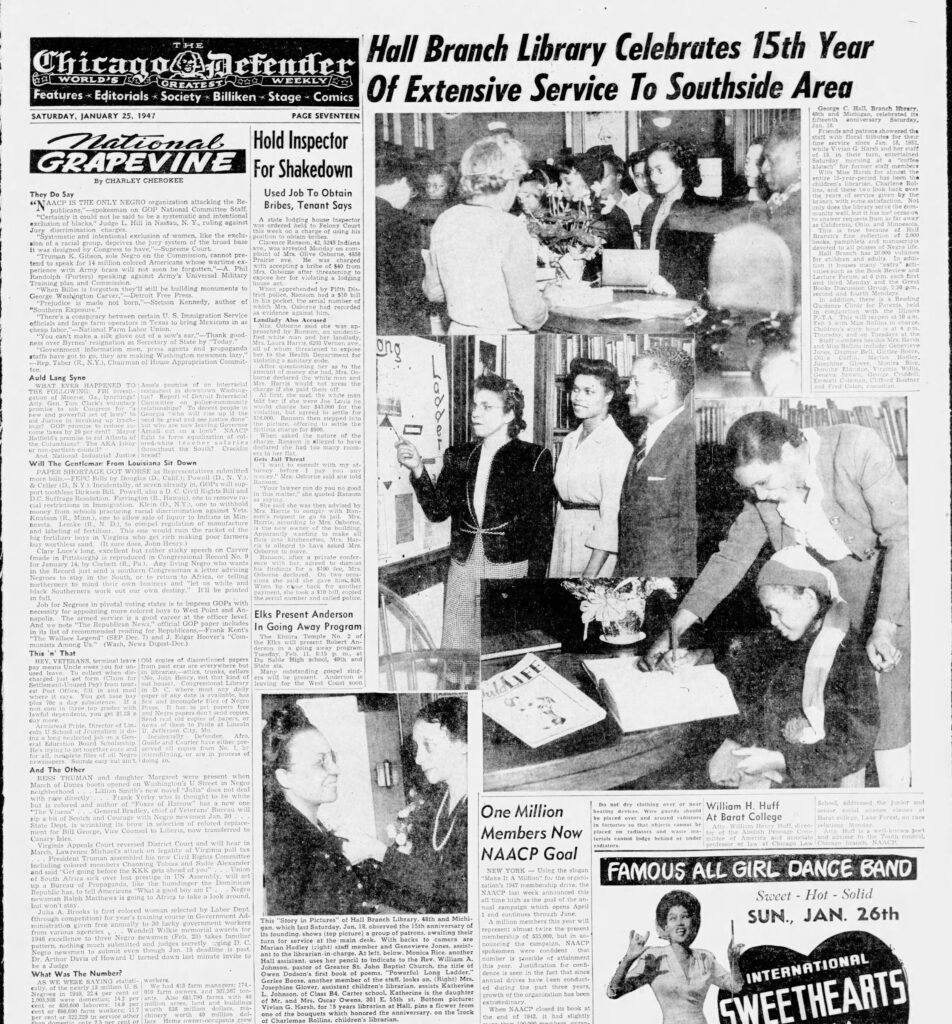
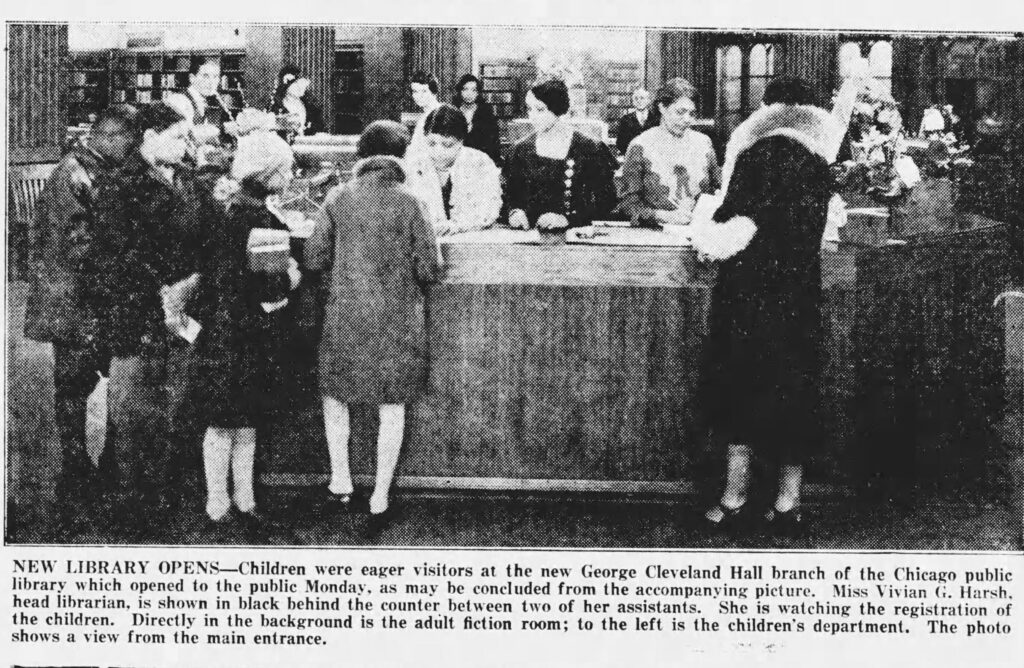
Vivian G. Harsh, Chicago’s first African American librarian, was also honored on the tour.
Dilla explained, “Vivian Harsh would travel the world looking for first edition books by women authors who never got a reprint. She has that collection here in Chicago.” Today, the Vivian G. Harsh Research Collection, located at the Carter G. Woodson Regional Library, 9525 S. Halsted Street, is the largest collection of its kind in the Midwest.
Dilla added, “It’s the second largest in America after the Smithsonian.” Through her dedication, Harsh ensured that women writers and their stories would never be forgotten.
Margaret Burroughs, founder of the DuSable Museum of African American History, began her work at home. Dilla recalled, “She founded the DuSable Black History Museum, the oldest Black history museum in the country, right in her house. The basement and first floor were the original home of the Ebony Museum of Negro History. She convinced her husband, against his wishes, to give up space so she could uplift not only Black people, but all people.” Her homegrown effort became a lasting institution for Black culture and pride.
Lorraine Hansberry, author of A Raisin in the Sun, drew from her Chicago roots to tell stories that reached the world. Dilla said, “If you didn’t cheat in high school, you probably read A Raisin in the Sun. That was her life story, and she was from Chicago.” Hansberry’s writing challenged America on race, identity, and deferred dreams, cementing Chicago’s place in Black literary history.
The pioneering journalist and activist Ida B. Wells-Barnett was described by Dilla as a foundational force in both journalism and the women’s suffrage movement. “She’s one of the pioneers of the women’s suffrage movement. She’s Susan B. Anthony’s mentor.
One of the most emotional stops focused on Mamie Till-Mobley, whose bravery after the murder of her son, Emmett Till, transformed the nation. Dilla explained, “When Mamie Till-Mobley lost her son, she could have just buried him and moved on. She decided to have an open-casket funeral so that the world could see what happened.
The tour also highlighted Mary T. Washington, the first African American woman to be certified as a public accountant in the U.S. Dilla emphasized, “You’ve got to be a certain kind of brilliant to be the first African American woman to be a CPA in this country.”
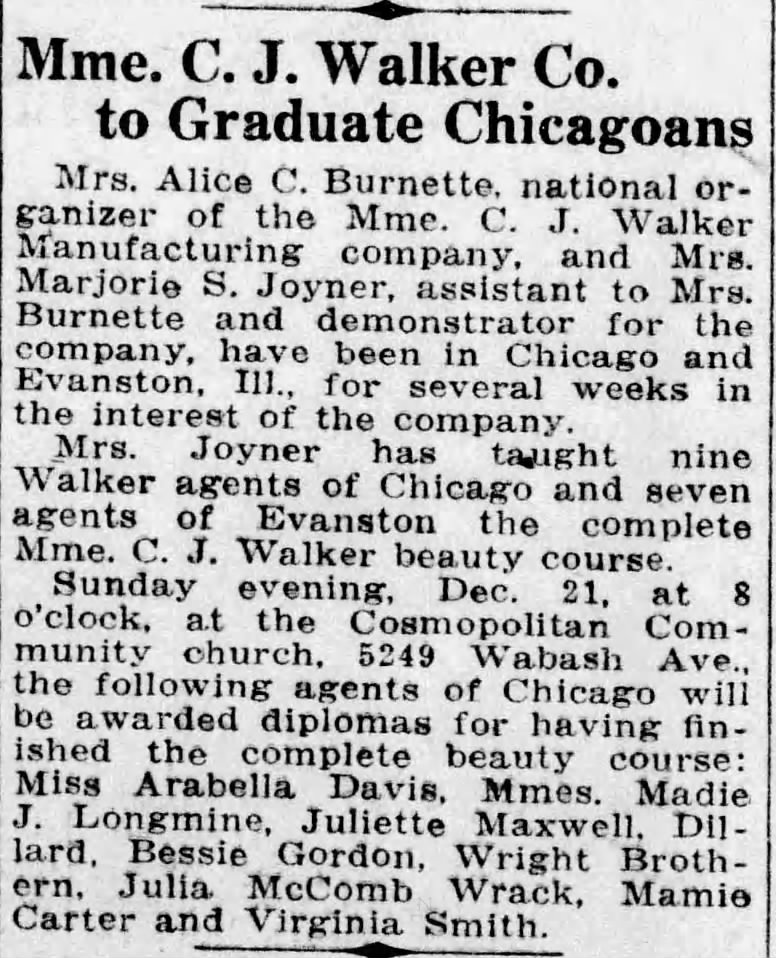
Marjorie Stewart Joyner was remembered in living memory, not just history books.
A Passenger on the tour bus and Chicago resident, Muteeat Lawal shared, “As I’m looking at the picture of Marjorie Stewart Joyner, remembering when she was my patient at the University of Chicago Hospital in the early 1990s, I had no idea who she was at the time. I just knew that she was a very elegant woman; her skin was just perfect. And I asked her one day, how do you keep your skin so nice? And she said, ‘Vaseline, honey.”
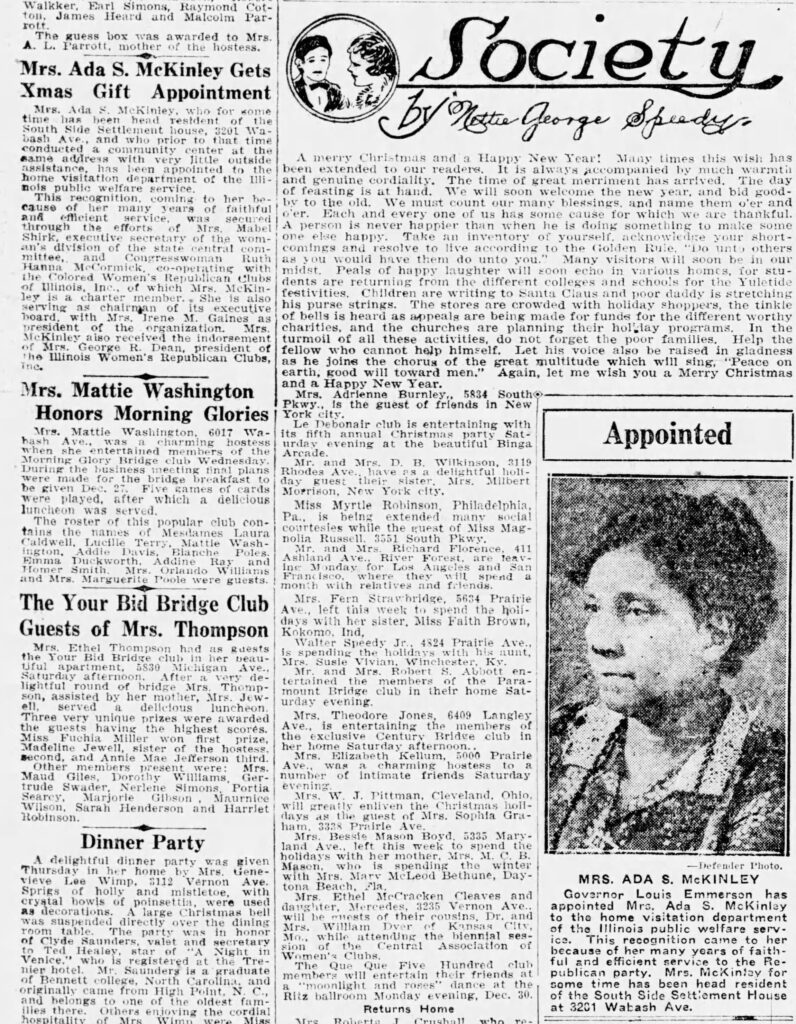
The tour honored Ada Sophia McKinley, whose decades in social service empowered Black families and women across Chicago, leaving a model of community care.
Running throughout Women’s History Month, public tours of “The Women Who Built Chicago” support YWCA Chicago’s TechGYRLS program, which empowers the next generation of female leaders. The tour underscores how Black history, women’s history, and Chicago’s history are inseparable, ensuring these stories are seen, heard, and celebrated.
Public tours continue through March 28, 2026, meeting at Chicago Women’s Park & Garden, 1801 S. Indiana Ave.Proceeds benefit YWCA Chicago’s TechGYRLS program. Learn more and reserve tickets at TheWomenWhoBuiltChicago.eventbrite.com.
Follow Ancestry @Ancestry and Shermann “Dilla” Thomas @6figga_dilla for updates and behind-the-scenes content.