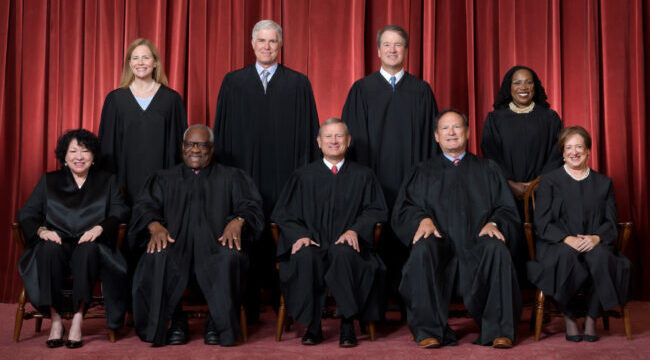

The U.S. Supreme Court heard arguments today in Louisiana v. Callais, a closely watched case that could shape how race is considered in drawing congressional maps and whether protections for Black voters under the Voting Rights Act remain intact.
At the center of the case is Louisiana’s 2024 congressional map, which added a second majority-Black district after courts found the state’s earlier map likely violated Section 2 of the Voting Rights Act by diluting Black voting power. Opponents argue the revised map constitutes an unconstitutional racial gerrymander, while civil rights groups say it is a necessary remedy to ensure fair representation.
The Court took the unusual step of rehearing the case after initial arguments last year, narrowing its focus to whether creating a second majority-Black district violates the 14th or 15th Amendments. Louisiana state officials have since stepped back from defending the map, leaving a coalition of Black voters and advocacy organizations to argue in support of it.
“This case is about whether we can address discrimination or are forced to ignore it,” said Sophia Lin Lakin of the ACLU’s Voting Rights Project, emphasizing that Section 2 has long served as a safeguard against racially discriminatory maps.
Plaintiffs and advocates framed the case as part of a broader, ongoing struggle for political representation. “Our fight for fair maps has taken years,” said Dr. Press Robinson, a lead plaintiff. “We hope the Court will affirm the right of Black voters to an equal voice in our democracy.”
Civil rights leaders warned that weakening Section 2 could have sweeping consequences. “Without it, states could carve up communities until their votes no longer matter,” said Alanah Odoms of the ACLU of Louisiana.
The case follows earlier rulings that Louisiana’s 2022 map violated federal law, and comes just two years after the Supreme Court upheld similar Voting Rights Act protections in Allen v. Milligan. A decision in Callais is expected later this term.