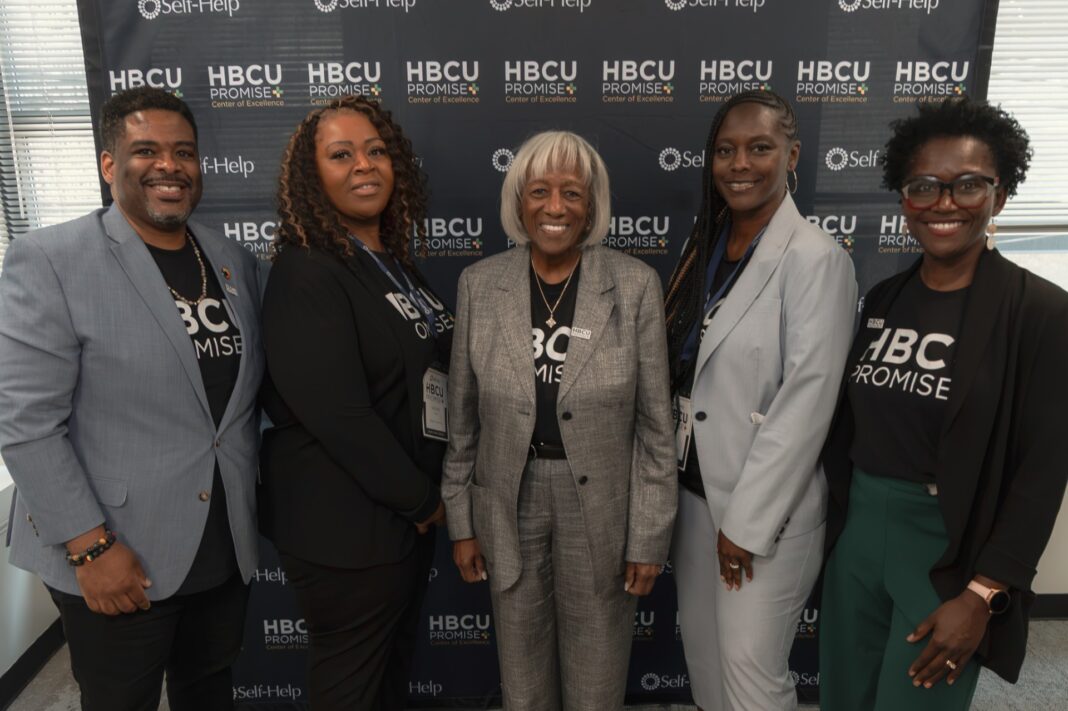

Self-Help today announced the launch of its HBCU Promise+ Legacy Program, kicking off the initiative with the inaugural HBCU Legacy Accelerator Program convening in Chicago. During the three-day workshop, leaders from six Historically Black Colleges and Universities (HBCU) came together to begin a two-year collaborative designed to strengthen institutional resilience, preserve campus assets, and expand long-term economic opportunity for students, alumni, and surrounding communities.
The inaugural HBCU Legacy Accelerator Program cohort includes:
- Benedict College
- Bennett College
- Johnson C. Smith University
- Livingstone College
- Shaw University
- Voorhees University
Representatives from each institution participated in the inaugural convening, where they began collaborative planning with Self-Help and technical advisors focused on financial resilience, real estate strategy, energy planning, and long-term institutional sustainability.
The convening also included a visit to the Obama Presidential Center, offering participants an opportunity to reflect on the impact of institutions that invest in leadership, civic engagement, and community. The experience served as a powerful reminder that preserving legacy is not only about protecting physical assets, but also about creating lasting opportunities for future generations.
“HBCUs have long served as engines of economic mobility, leadership development, and community wealth creation,” said Carl S. Brown, Vice President of Community Engagement and Executive Director of HBCU Promise+ at Self-Help. “We are proud to invest in colleges and universities whose impact extends far beyond their campuses. The HBCU Promise+ Legacy Program reflects our commitment to ensuring these institutions have the resources, partnerships, and capital needed to preserve their legacy and thrive for generations to come.”
The HBCU Promise+ Legacy Program is built around three integrated pillars:
HBCU Legacy Fund
The HBCU Legacy Fund will provide access to affordable, patient growth capital, with a commitment to deploy up to $200 million to support institutional priorities, strategic investments, and long-term sustainability initiatives.
HBCU Legacy Accelerator Program (LAP)
The HBCU Legacy Accelerator Program is a two-year cohort-based initiative focused on helping participating institutions strengthen financial resilience, protect and maximize campus assets, modernize energy infrastructure, diversify revenue streams, and explore shared services opportunities. Participating institutions will receive technical advisory support in the areas of finance, real estate, legal services, energy planning, and institutional strategy.
The two-year HBCU Legacy Accelerator Program is funded by the Robert Wood Johnson Foundation* (RWJF) and reflects a shared commitment to advancing the long-term vitality of Historically Black Colleges and Universities and the communities they serve. In addition to providing $3M in grant funding for the HBCU Legacy Accelerator Program, RWJF has provided a $20M loan to Self Help Ventures, a CDFI loan fund, to meet the needs of HBCUs for affordable, patient growth capital and to meet the lending needs of other entities in the region.
HBCU Financial Literacy Resources
The third pillar delivers financial literacy and wealth building resources for HBCU students, alumni, and working professionals through homecoming-based engagement, financial and holistic socioemotional wellness programming, and initiatives that support pathways to homeownership and economic mobility.
The Chicago convening marked the beginning of the two-year accelerator experience, introducing participating institutions to subject matter experts and peer leaders while establishing collaborative action plans that will continue over the life of the program.
“For more than four decades, Self-Help has worked to create and protect ownership and economic opportunity for all,” said Martin Eakes, Chief Executive Officer of Self-Help. “Historically Black Colleges and Universities are among our nation’s most important institutions for expanding opportunity and advancing economic mobility.”
“There are challenges that we are all wrestling with. What excites me about the HBCU Promise+ Program is the opportunity to address those challenges together through a shared cohort,” said Dr. Paulette R. Dillard, President, Shaw University.
“The educational offerings of HBCUs and the real estate the schools occupy are valuable assets to a community,” said Kimberlee Cornett, Director of Impact Investment at the Robert Wood Johnson Foundation. “HBCUs have a long history of expanding opportunity and advancing economic mobility. The Legacy Accelerator Program will help schools chart a sustainable future for their educational services and real estate.”
Through the HBCU Legacy Accelerator Program, participating institutions will receive grant funded support for critical real estate asset reviews, energy assessments, strategic planning support, and additional support for participation in cohort convenings with peer institutions and industry experts.
The HBCU Promise+ initiative builds on Self-Help’s longstanding commitment to strengthening communities through ownership, economic opportunity, and strategic partnerships with mission-aligned organizations and institutions. HBCUs play a critical role in advancing educational attainment, wealth creation, and community development, making them essential partners in building a more inclusive economy.
For more information about the HBCU Promise+ Legacy Program, visit the HBCU Promise+ program page.