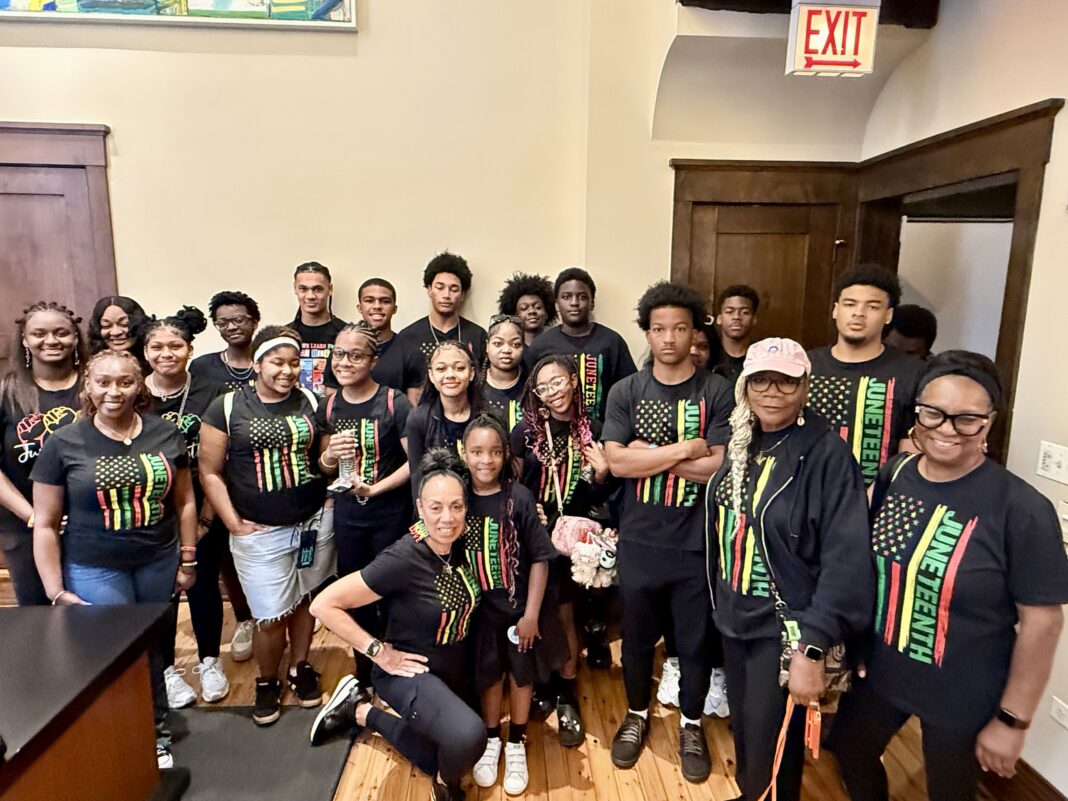

Juneteenth in Chicago took on special meaning this year as young people from Michigan gathered in the city for a transformative weekend centered on history, financial empowerment, leadership, and legacy.
Hosted under the theme “Legacy in Motion: Honoring the Past, Building the Future,” the experience brought together youth participants from Money Matters for Youth, led by renowned financial educator, author, entrepreneur, and mentor Gail Perry-Mason. Their annual educational trip included a visit to Chicago’s historic landmarks, discussions on African American history, financial literacy training, and attendance at the opening weekend festivities of the Obama Presidential Center.
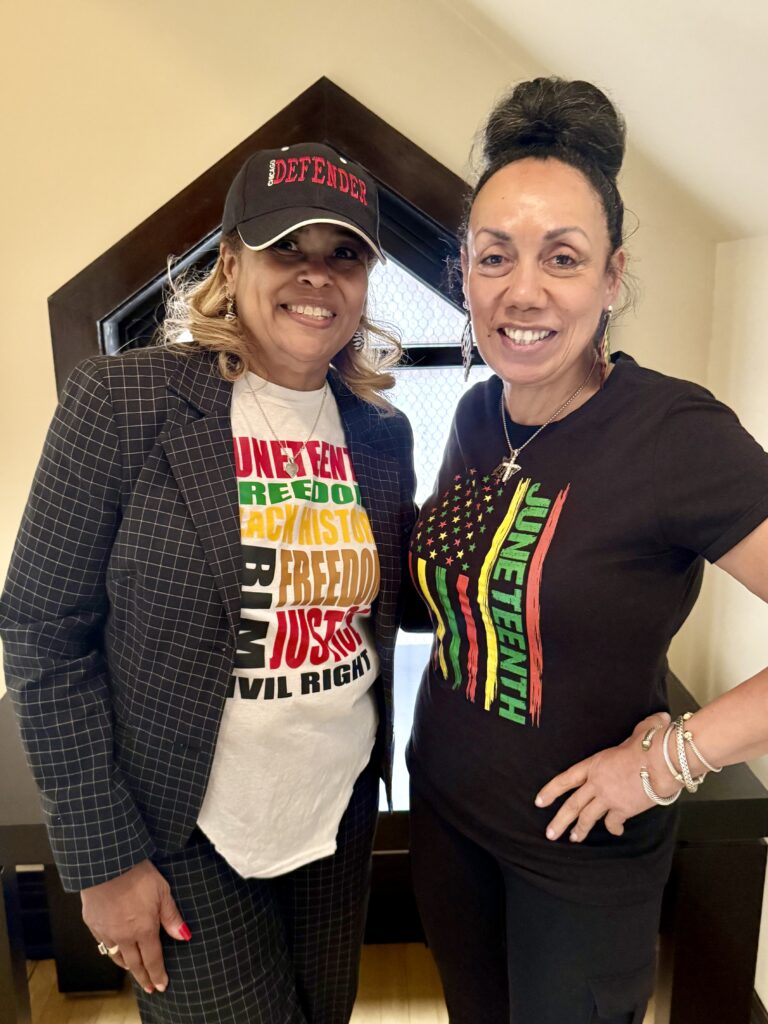
Representing the Chicago Defender, Publisher and Regional Vice President Dyanna Knight Lewis and Multimedia Journalist Nicole Joseph engaged students in conversations about the significance of Juneteenth, the role of journalism in advancing social change, and the enduring legacy of Black-owned institutions.
Freedom Delayed, But Never Denied
The conversation began with the history of Juneteenth. While President Abraham Lincoln issued the Emancipation Proclamation on January 1, 1863, declaring enslaved people in Confederate states free, the proclamation could only be enforced where Union troops had control. As a result, many enslaved people remained in bondage for more than two years after the order was signed.
Freedom finally reached the last enslaved African Americans in Galveston, Texas, on June 19, 1865, when Union soldiers arrived and announced that slavery had ended. That day became known as Juneteenth, a celebration of freedom, resilience, and the ongoing pursuit of equality.
For the students, the lesson served as a powerful reminder that freedom is not only about liberation from physical bondage but also about access to opportunity, education, and economic empowerment.
The Chicago Defender: More Than a Newspaper A significant portion of the discussion focused on the history and impact of the Chicago Defender, one of the most influential institutions in African American history.
Founded on May 5, 1905, by Robert S. Abbott, the Defender became a powerful voice for Black Americans during some of the nation’s most challenging periods. Born to formerly enslaved parents in Georgia, Abbott faced systemic barriers despite earning a law degree. Refusing to accept those limitations, he launched a newspaper that would become a catalyst for change.
For more than 120 years, the Defender has documented Black life, challenged injustice, celebrated achievement, and advocated for civil rights. Historians often note that the publication did more than report history—it helped make history.
Students learned about the newspaper’s critical role in encouraging and supporting the Great Migration, during which millions of African Americans left the South seeking greater opportunities in northern cities. Through its reporting, job postings, and advocacy, the Defender helped countless Black families envision and pursue new possibilities.
The discussion also connected the Defender’s historic print journalism to today’s digital landscape, allowing students to explore how storytelling, technology, and media continue to shape public opinion and community engagement.
Financial Freedom as a Modern Civil Right
The day also highlighted the importance of financial literacy and economic independence.
In partnership with First Independence Bank, whose mission is to serve as a beacon for capital accumulation within underserved and minority communities, students participated in conversations designed to equip them with practical tools for financial success.
For Gail Perry-Mason, financial literacy is more than a skill—it’s a pathway to freedom.
Growing up in Detroit and navigating the foster care system, Mason transformed her own experiences into a mission to empower young people. Today, she is a nationally recognized speaker, bestselling author, entrepreneur, and mentor whose work has been featured by BET, CNN, Fox News, MSNBC, NPR, and PBS.
For more than three decades, Mason has dedicated her life to ensuring that young people, particularly those facing adversity, have access to opportunities she once lacked.
Through Money Matters for Youth, a financial literacy program serving youth ages 8 to 18, participants learn the fundamentals of economics, entrepreneurship, investing, and financial responsibility. The program’s mission is to teach children the principles of wealth-building while fostering personal growth, leadership, and community engagement.
The students arrived eager to learn, ask questions, and share their experiences. Throughout the day, they demonstrated a commitment to personal growth and a desire to become leaders in their own communities.
Inspired by a Legacy of Possibility
The group’s Chicago experience culminated with a visit to the opening weekend of the Obama Presidential Center, where students witnessed firsthand a powerful example of what vision, perseverance, and public service can accomplish.
Walking the 19.3-acre campus, the young visitors saw more than a collection of buildings. They saw proof that dreams can become reality.
The experience reinforced a message that echoed throughout the weekend: no matter where a person begins, they have the power to shape their future and positively impact the lives of others.
As they explored the center dedicated to the legacy of President Barack Obama and First Lady Michelle Obama, students were encouraged to dream boldly, pursue excellence, and recognize that their own stories have the potential to inspire generations to come.
Student Reflections
The lessons of Juneteenth, journalism, financial literacy, and legacy resonated deeply with the students, many of whom reflected on how the experience broadened their understanding of history and community.
Donald Williams Jr. shared that learning about the Chicago Defender left a lasting impression on him. “I learned about the Chicago Defender’s history and how the Defender allowed us to learn more about our community,”Williams said. “Today, we struggle with outsourcing information. It’s important that we can get the information we need for us, by our own people.”
For Josiah Johnson, the day connected several powerful experiences, from visiting the Obama Presidential Center to learning about journalism and financial institutions.
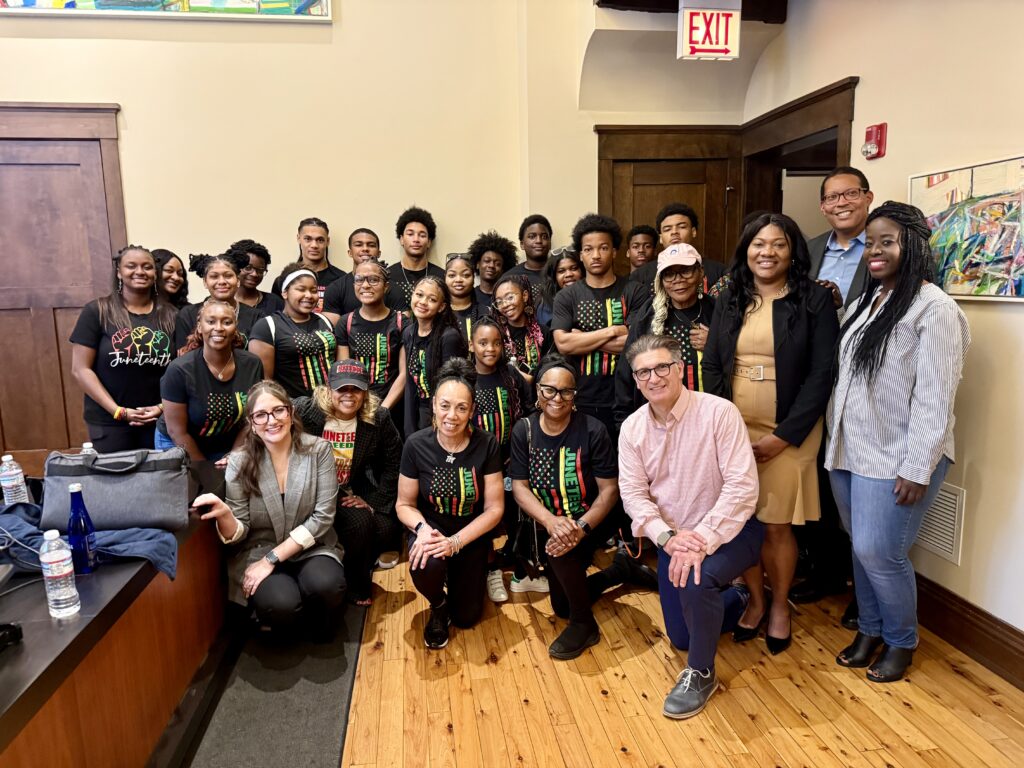
“My experience today was beautiful,” Johnson said. “Going from the Presidential Center to this, learning about your jobs, and how important banking is—it was all meaningful. Today was a chance to learn how banks protect people’s money and livelihoods.”
Johnson also reflected on the importance of Black-owned media and the history behind Juneteenth.
“What I learned about the Chicago Defender is that we were able to put out our own stories. It was raw, and it was for us. It was the news that we needed to hear,” he said. “With Juneteenth, I learned how hard it was for us to become free and how some people weren’t told they were free because of others’ selfish needs. That really stood out to me.”
The conversation also expanded beyond Chicago, as students and their leaders enthusiastically discussed the role of the Michigan Chronicle in their own communities. They spoke about what the publication means to Detroit residents and how it has remained a trusted source of information. Their appreciation reflected a broader understanding of the importance of Black-owned media institutions and their continued ability to inform, uplift, and connect communities across generations.
Their reflections underscored the purpose of the day: connecting history to present-day opportunities while empowering the next generation to become informed, engaged, and impactful leaders.
Standing firmly on the belief that “Freedom opens the door. Legacy keeps it open for generations to come,” the youth participants embraced a weekend rooted in history, empowerment, and possibility.
Their journey embodied the spirit of the event’s theme: honoring the sacrifices of the past while actively building the future.
As the group reflected on the experience, one message remained clear: “We move together. We learn together. We celebrate together. We return home together.”