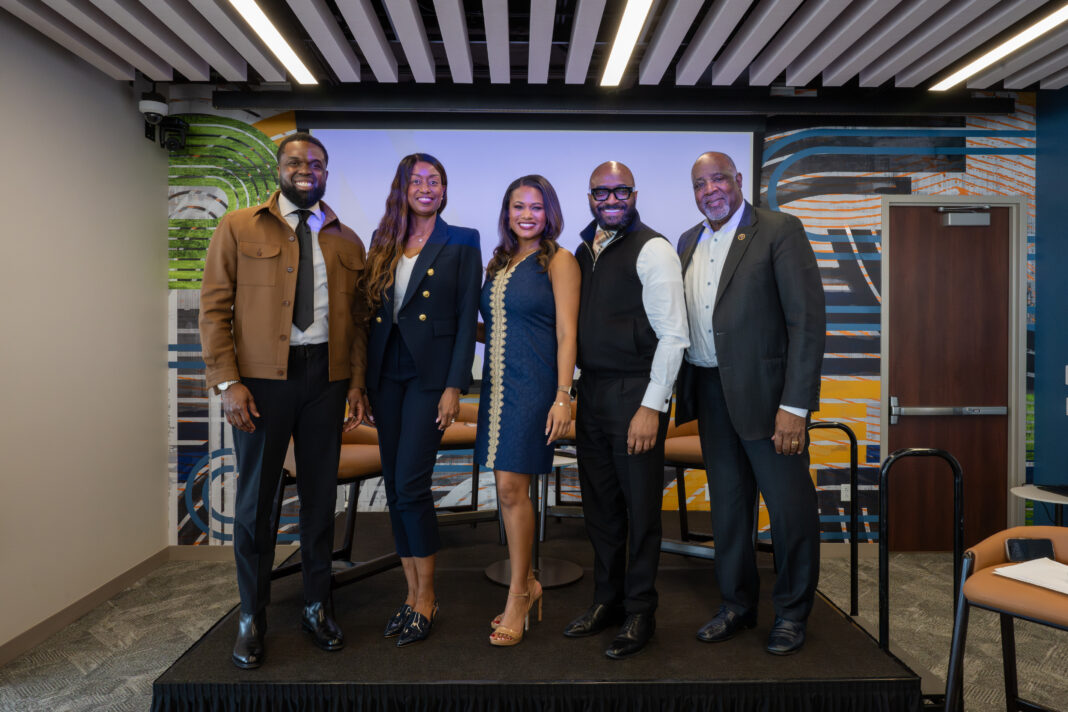

Photo Credit: Northwestern Medicine
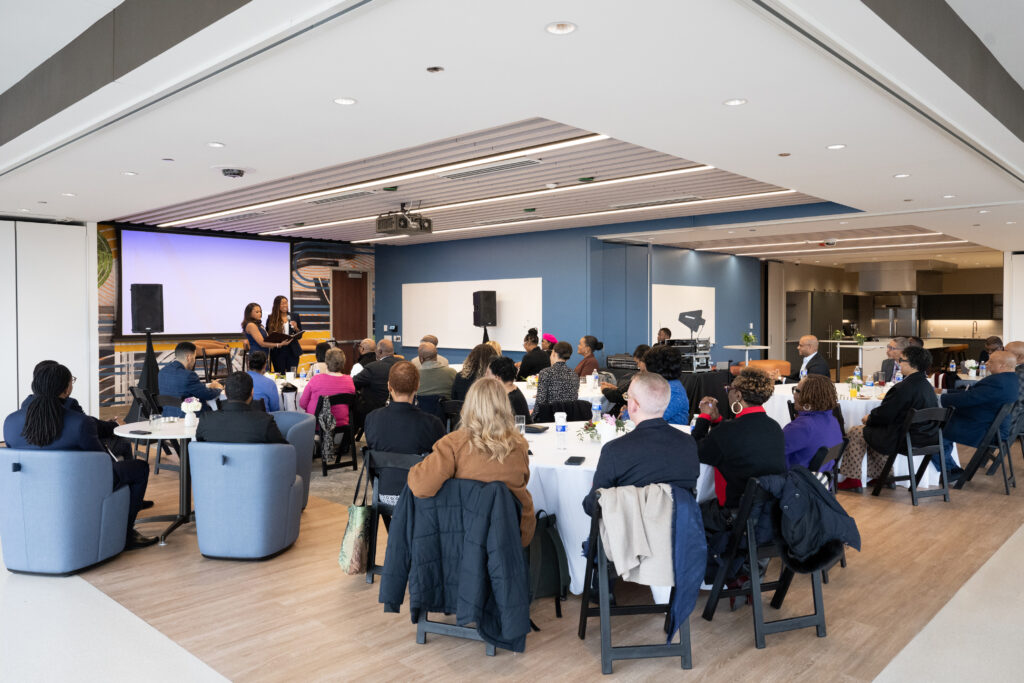
Faith leaders, medical professionals, and community advocates gathered on Chicago’s South Side for a timely and urgent dialogue on health equity, access, and trust at the Northwestern Medicine Bronzeville Outpatient Center located at 4822 S. Cottage Grove Ave.
The brunch, hosted by Samantha Chatman of ABC 7 Chicago, brought together key voices dedicated to improving health in underserved communities.
At the program’s opening, Chatman highlighted the importance of collective leadership in addressing longstanding disparities.
“Today is about connection, conversation, and community,” Chatman said. “When trusted voices from faith institutions and healthcare systems come together, we create real pathways for change.”
The gathering showcased the 120,000-square-foot outpatient center, a major Northwestern Medicine investment. The center’s design includes African cultural symbolism and was developed to reflect Bronzeville’s heritage and needs.
A Commitment to Equitable Care
Dr. Kimbra Bell, Medical Director and Clinical Professor at Northwestern University Feinberg School of Medicine, described the center as fostering sustained, equitable access to healthcare for the community.
“This building represents a promise that exceptional care should not depend on your address. World-class medicine must exist in every community, and that commitment begins with listening.”
Bell noted that community input was central to shaping the center’s services. Before construction, Northwestern Medicine leaders engaged residents, faith leaders, and neighborhood organizations to determine which specialties and resources were needed most.
As a result, the facility offers comprehensive care, including primary care, pediatrics, cardiology, dermatology, endocrinology, nephrology, oncology, rehabilitation, and behavioral health. On-site advanced diagnostic imaging includes CT, MRI, mammography, and ultrasound.
“Prevention is central to our mission,” Bell said. “We want to empower patients with knowledge and tools to take ownership of their health, not just treat illness when it arises.”
Faith as a Bridge to Wellness
Faith leaders at the brunch emphasized churches’ historic role as trusted institutions in Black communities, highlighting their function as access points to resources and support.
Rev. Dr. Charlie Dates, Senior Pastor of Progressive Baptist and Salem Baptist Church, called the center transformative for congregations facing health challenges.
“I hear the same diagnoses repeatedly, hypertension, diabetes, kidney disease, and stroke,” Dates said. “Having a center like this in proximity to our congregations makes healthcare personal. It allows us to care for our members beyond spiritual guidance.”
Rev. Dates stressed that culturally affirming spaces promote healing.
“To come into a space where your humanity is affirmed is pastoral,” he said. “Body, mind, and spirit are interconnected, and healthcare must reflect that reality.”
Pastor Chris Harris, Founder of Bright Star Community Outreach, stressed the importance of advocacy and engagement for the project’s success.
“If we do not use our voices to speak truth to power, nothing changes,” Harris said. “Healthcare must be three things in every neighborhood: accessible, affordable, and available. These are separate issues that each affect our communities.”
Harris praised Northwestern Medicine for involving residents in planning.
He praised Northwestern Medicine for genuinely engaging residents during planning, describing it as an authentic partnership and essential to building trust.
Addressing Historical Mistrust
Bishop Dr. Horace Smith spoke directly about systemic inequities influencing healthcare engagement in Black communities.
“Access is more than geography,” Smith said. “You can live next door to a hospital, but if you do not trust the system, you may never walk through its doors.”
Smith emphasized the need for greater cultural competency and representation in the healthcare workforce.
“Faith and science are not incompatible,” he added. “Both are rooted in trust, and trust must be earned through consistent, compassionate care.”
A Model for Prevention and Community Engagement
The center features a dedicated wellness space, including a commercial teaching kitchen for nutrition education and chronic disease management. Programs focus on diseases affecting Black communities, such as diabetes and cardiovascular disease.
Other wellness features include a fitness room and a rooftop garden that support holistic health and sustainability.
Dr. Bell said these spaces broaden the definition of wellness, as healthcare should reach into patients’ everyday lives.
Community Voices and Lasting Impact
The event also included testimony from community member Angela Wilson, who shared her family’s healthcare challenges.
“For many families, access to care can feel overwhelming. When patients feel seen and heard, they are more likely to seek care early,” she said.
Since opening, the Bronzeville Outpatient Center has received strong patient satisfaction ratings and widespread community approval. Leaders attribute this success to high “likely to recommend” scores and feedback specifically praising the Center’s welcoming atmosphere, culturally responsive staff, and accessible services such as free parking and extended hours.
However, speakers noted that ongoing outreach is needed to ensure residents are aware of available resources.
“There are individuals living within a mile of this facility who still do not know we are here,” Dr. Bell said. “Partnership with faith leaders and community organizations is essential to spreading awareness.”
A Collective Commitment to the Future
The brunch ended with a commitment to deepen collaboration between healthcare providers and faith institutions to address disparities.
“This is about more than infrastructure,” Dr. Bell said in closing. “It is about building relationships and ensuring that every person has the opportunity to live a healthy life.”
The Bronzeville outpatient center serves all patients, regardless of insurance. For the uninsured, staff help navigate alternative options to ensure access to needed care.
For more information, visit https://www.nm.org/locations/bronzeville-outpatient-center.