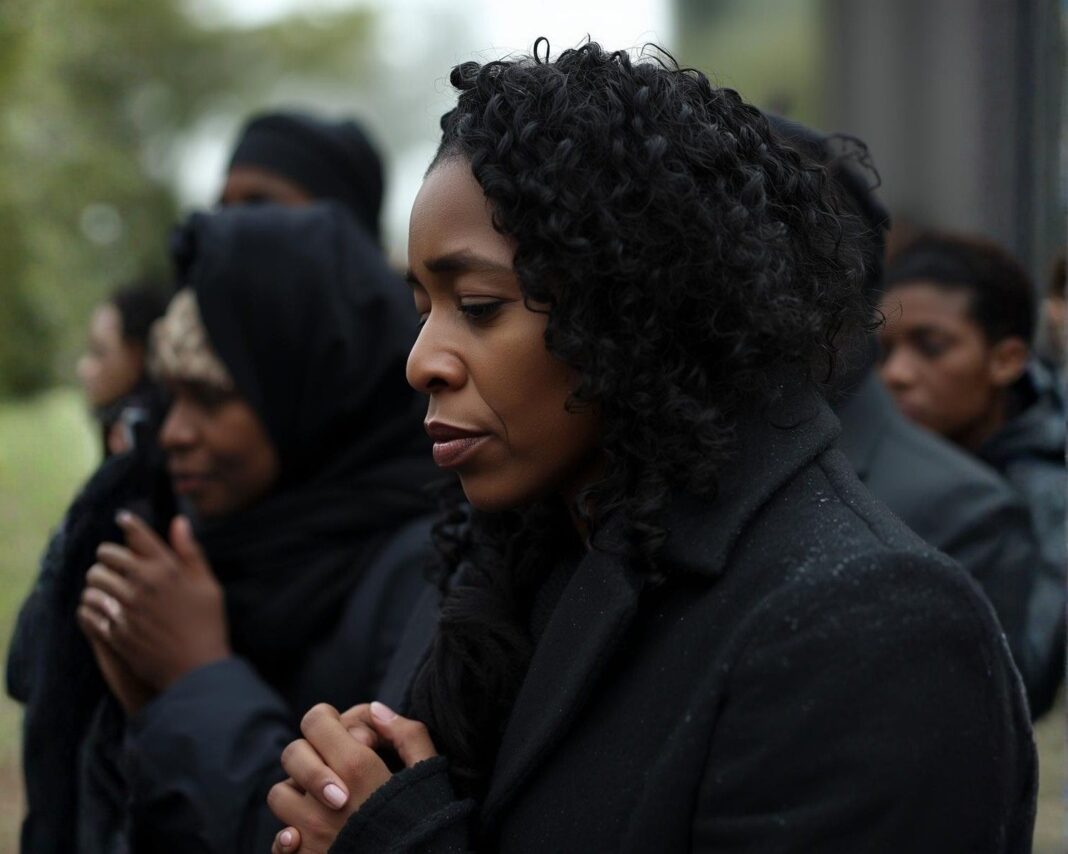

Grief is often described as a wave, a fog, a storm you hope will pass. But for Black people, especially Black women, grief is not always a temporary state. It can become a background hum, a quiet constant, something woven into the fabric of how we live, love, and move through the world. And because of this, we are often forced to hold our grief in silence or strength, without the space to fully feel it, honor it, or let it teach us.
We are praised for our resilience, our ability to bounce back, our capacity to show up even when we are aching inside. That kind of strength has carried generations, but it has also cost us parts of ourselves. What happens when we stop asking ourselves to push through and instead ask, ” How can I sit with this pain? How can I allow it to speak to me, change me, remind me that my sorrow is sacred too?
Grief is spiritual work. It is emotional, embodied, and deeply personal. When we grieve, we are not just mourning who we lost. We are also connecting with the love that shaped us, the stories that built us, and the lineages that brought us here. Grief holds memory. It carries names. It carries rituals we may have forgotten, but our spirits still know.
In many African and diasporic spiritual systems, mourning is not rushed. It is communal, intentional, and full of ceremony. People grieve out loud. They cry. They sing. They hold vigils. They speak to their dead with reverence. Death is not viewed only as an ending, but as a passage and a return. There is space for sorrow, and within that space, there is also room for healing.
In contrast, Western culture tends to reduce grief to a brief leave from work, polite nods and condolences, and a timeline that rarely reflects the reality of mourning. Especially in Black communities, where grief is layered with daily survival, we are often denied the right to fully grieve. From the loss of loved ones to the loss of stability, safety, or community, our pain is rarely treated as sacred.
But this is beginning to shift. More of us are finding ways to grieve with intention. Whether through altar work, journaling, therapy, or gathering with others, we are allowing grief to be a teacher, not just a burden. We are lighting candles for our dead. We are cooking the meals that remind us of home. We are writing names on slips of paper and placing them near sunlight. We are remembering that mourning is not weakness. It is care.
There is a quiet movement happening among Black therapists, artists, and spiritual practitioners who are shaping new rituals around grief. They are creating spaces where sorrow can be witnessed. They are reminding us that loss does not always need fixing, only tending. When we hold space for our own grief, we make space for collective healing. We begin to ask: what do we, as a community, need to mourn fully and freely?
We may not always have the language. Sometimes the sadness is vague. Sometimes it is inherited. But when we make time to listen, grief shows us what we have loved and what we are still longing to hold. It is not a problem to be solved. It is a process that brings us closer to ourselves.
Letting grief move through the body is an act of resistance in a world that expects emotional numbness. Choosing to feel is choosing to remain human. It is choosing to stay soft when the world has tried to harden us.
Grief is not a detour from healing. It is part of the path. The more we honor it, the more space we create for transformation. And in doing so, we reclaim the right to mourn as deeply as we live.