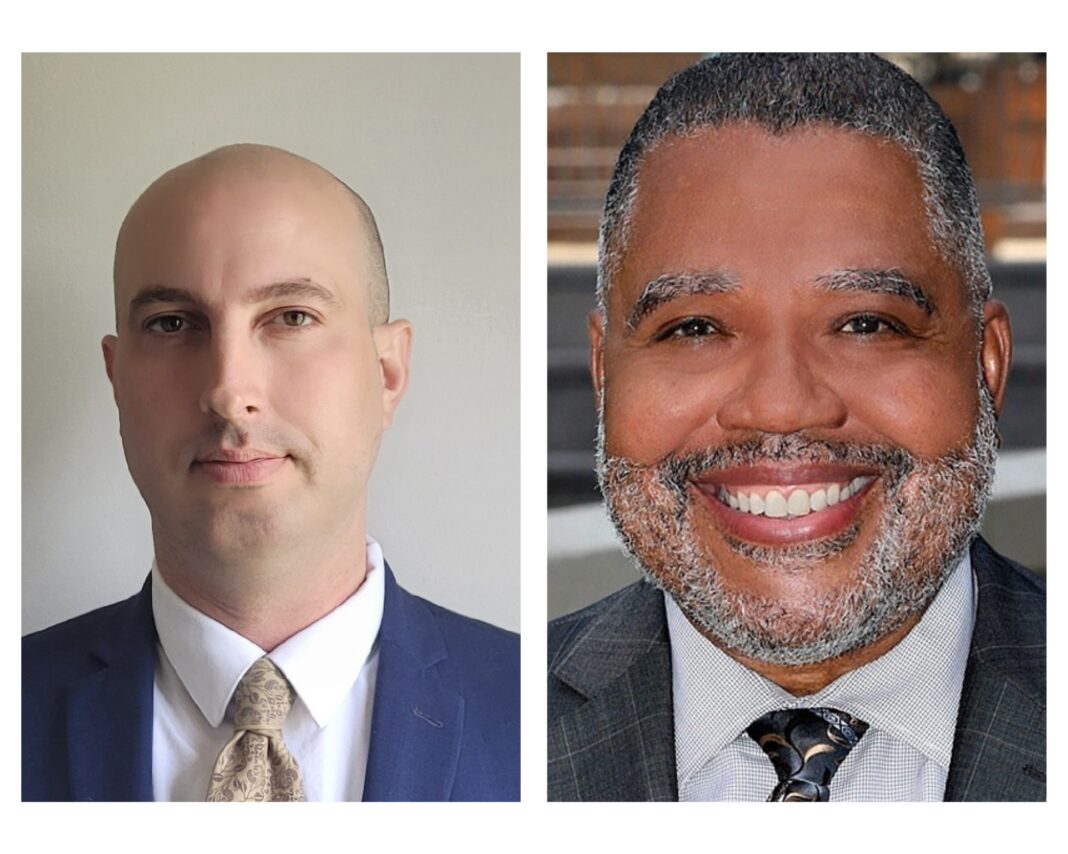

By Donald Dew and Patrick Dombrowski
The healthcare safety net on Chicago’s West Side is not a backup plan. It is a lifeline for communities that have endured decades of disinvestment, trauma, and preventable inequities.
Hospitals, community health centers, mental health clinics, and social service organizations form the system that delivers essential care to residents who often have no other access point. This network has always operated with limited resources and thin margins because of its commitment to serving Medicaid populations.
But now the safety net is under siege from significant funding cuts from the federal government. Cuts to Medicaid and other federal programs, many of which are already taking effect, hit Chicago’s most vulnerable communities faster and harder. In these communities, Medicaid is not just insurance. It is the primary engine that keeps health care and community supports functioning.
The stakes could not be higher. In neighborhoods where life expectancy can be 20 years shorter than downtown, and where rates of chronic illness, violence, and poverty are significantly higher, the safety net saves lives. When this system is strained or underfunded, the consequences are immediate.
The good news is that when we invest in coordinated community care, outcomes improve. In 2021, the state invested $250 million in Healthcare Transformation Collaboratives across Illinois to address long-standing disparities.
These collaboratives were created to bring all providers together in a model that works better. Instead of focusing primarily on triage, the collaborative approach centers on recovery and prevention. It recognizes that health outcomes are shaped not only by medical care, but by stable housing, access to benefits, trauma-informed support, culturally responsive services, and consistent follow-up during moments of vulnerability.
Collaborative Bridges is one of those efforts. It was created to solve a costly and heartbreaking problem: too many people with serious mental health and substance use conditions are cycling in and out of hospitals without the community support necessary to stay well.
The mission of Collaborative Bridges is simple: To make sure people with mental health and addiction challenges do not cycle back into the hospital after discharge by centering care and support in the community.
In 2025 alone, Collaborative Bridges provided crisis support to more than 2,300 people who had a history of repeated psychiatric hospitalizations. More than half of the people we serve are experiencing homelessness, which makes this patient cohort the most difficult to help. But when people are connected to housing support, follow-up care, and community-based services, like food, financial assistance and transportation, outcomes improve.
In Cook County, about 35 percent of Medicaid patients discharged from a psychiatric hospital are readmitted. Among the people served by Collaborative Bridges, that number is 18 percent. Collaborative Bridges has reduced the costs of care by 63 percent, equating to roughly $4 million in avoided costs to Medicaid.
Cutting federal funding for safety-net care will not save money. It will shift costs to emergency rooms, shelters, police departments, and families already stretched thin. Illinois has demonstrated that coordinated community care works when it is supported. But it will not survive on good intentions alone.
Collaborative Bridges has released a new issue paper, Bridging the Gaps, which outlines what proposed Medicaid cuts could mean for neighborhoods across the West Side. It also shows that there is another path forward, one that is already working locally.
When the safety net breaks, families and neighbors pay the price. Programs that keep people stable, safe, and connected to care must be protected.
Readers can learn more or download the Bridging the Gaps issue paper at www.thecollaborativebridges.org.
Collaborative Bridges is a partnership of: Humboldt Park Health, Loretto Hospital, Hartgrove Hospital, Community Counseling Centers of Chicago, Habilitative Systems Inc., Bobby E. Wright Behavioral Health Center, TASC Inc., and PCC Community Wellness.
Donald Dew is CEO of Habilitative Systems Inc. (HSI) and a founding board member of Collaborative Bridges.
Patrick Dombrowski is Executive Director of Collaborative Bridges.