
Property is Power!
Interest rates are numbers, but their consequences are human. When the Federal Reserve raises interest rates, the conversation quickly turns to inflation, Treasury yields, basis points and monetary policy. Those concepts matter, but for ordinary families the question is much simpler: What does this mean for me, my family and my ability to own property?
For Black America, that question deserves particular attention not because the mathematics of a mortgage changes according to race, but because we do not enter the housing market from the same historical starting point. The Black homeownership rate continues to significantly trail the rate for White households. That gap represents more than who owns a house and who does not. Over generations, it has meant differences in access to equity, appreciating assets, financial stability, inheritance and the ability to transfer wealth from one generation to another. This is why changes in the cost of money have consequences that extend well beyond a monthly mortgage payment.
The Federal Reserve recently increased its benchmark federal funds rate by one-quarter of a percentage point as it continues its effort to control inflation. It is important to understand that this does not mean mortgage rates automatically increase by one-quarter of a percentage point. Mortgage rates are influenced heavily by the bond market, particularly longer-term Treasury yields, along with inflation expectations, economic growth, investor demand and expectations about future Federal Reserve policy. Nevertheless, the broader reality is straightforward money remains expensive, and housing affordability is under considerable pressure.
Consider what that means in actual dollars. On a $300,000, 30-year mortgage at 6.5 percent, the principal-and-interest payment is approximately $1,896 per month. At 7.5 percent, that same $300,000 mortgage costs approximately $2,098 per month. That is roughly $202 more each month, or more than $2,400 a year, before property taxes, homeowners insurance and other housing expenses are considered. For a working family, $200 a month is not an abstract economic statistic it is groceries, utilities, gas, savings or money that could otherwise be invested.
This is the legitimate challenge of higher interest rates they reduce purchasing power. A family that could comfortably qualify for a particular price range when rates were lower may have to purchase a less expensive property, contribute a larger down payment or reconsider the timing of a purchase. Some families will decide that they should wait financial prudence should always come before the emotional desire to own a home.
But there is another side of the equation that receives considerably less attention. Markets adjust when money becomes more expensive, fewer buyers are able or willing to compete for property. Demand can weaken, price appreciation can slow and, depending on local supply and demand,
sellers can become more willing to negotiate. This does not mean that home values automatically decline every time mortgage rates increase. Real estate is local, and limited housing inventory can keep prices elevated even in a high-rate environment, but higher rates can change something almost as important as price “negotiating and leverage”.
The buyer who once competed against 15 offers may now compete against three. A seller who previously refused to pay closing costs may reconsider. Builders may offer incentives; sellers may agree to contribute toward an interest-rate buydown. Properties that once sold in days may sit on the market long enough for a thoughtful buyer to conduct proper inspections, negotiate repairs and make a rational financial decision instead of reacting to the fear of missing out.
That is why I believe buyers should learn to evaluate the entire transaction rather than becoming fixated on a single number called the mortgage rate. When interest rates are extremely low, buyers can afford larger mortgage balances, demand often increases and competition can push property prices higher. When rates rise, financing becomes more expensive, demand can weaken and the balance of negotiating power can begin to shift. The relationship is not perfect, and it certainly does not mean that higher rates and lower prices always “wash each other out.” But it does mean that the price of the property and the price of the money used to purchase it should always be considered together.
A 6 percent mortgage attached to an overpriced property is not automatically a better financial decision than a 7 percent mortgage attached to a property purchased at the right price with meaningful seller concessions. The more sophisticated questions are: What am I actually paying for the property? What is my monthly obligation? What concessions can I negotiate? How long do I intend to own it? What are the taxes and insurance? What is the neighborhood’s long-term economic trajectory? And most importantly, does this purchase fit comfortably within my family’s broader financial plan?
For Black Americans, I believe there is an additional lesson here we cannot build our homeownership strategy around waiting for the perfect economy. History has rarely presented Black families with perfect economic circumstances. If we wait for low interest rates, low property prices, plentiful inventory, rapidly rising wages, economic certainty and ideal credit conditions to occur simultaneously, we could spend years waiting while ownership and wealth creation continue around us.
That is not an argument for buying a house simply because one is available quite the opposite we should be prudent. We should know our numbers, protect our emergency reserves, understand our credit and refuse to become house-poor merely for the privilege of saying that we own something. We should compare financing options, negotiate aggressively, understand seller concessions and rate buydowns, and recognize the difference between qualifying for a mortgage and comfortably affording one. Ownership without financial stability defeats much of the purpose of ownership.
The same discipline applies to real estate investors higher financing costs expose weak investments very quickly. A property that appeared profitable when inexpensive money was available may no longer produce adequate cash flow at today’s borrowing costs. That forces
investors to become more disciplined about purchase price, rents, taxes, insurance, repairs, vacancy, maintenance and debt service. In some respects, difficult markets can create better investors because appreciation can no longer be casually assumed to rescue a poorly structured transaction.
There is also an important distinction between today’s mortgage and a forever mortgage. If someone purchases a sound property at a price they can comfortably afford and interest rates eventually decline, refinancing may become an option. There is no guarantee that rates will decline, when they will decline or that every homeowner will qualify to refinance when they do. Therefore, no one should purchase a home today based on the assumption that refinancing will save them tomorrow. The payment needs to make sense today. If refinancing becomes advantageous later, that should be viewed as an opportunity rather than the foundation of the original decision.
After more than three decades in mortgage lending, I have watched markets change repeatedly. Interest rates rise and fall. Property values accelerate and cool. Credit standards tighten and loosen. Economic confidence comes and goes. Yet one principle has remained remarkably durable: ownership matters.
For Black America, increasing homeownership is not simply about accumulating houses. It is about accumulating assets. It is about equity, stability, inheritance and having something tangible to transfer to the next generation. A home can become collateral for opportunity, a source of retirement security, an asset inherited by children or simply the place where a family lives without wondering what next year’s rent increase will be. Real estate alone will not solve the racial wealth gap, but it remains one of the most accessible wealth-building assets available to ordinary American families.
Higher interest rates therefore deserve our attention and our respect, but they do not deserve our fear. A difficult housing market should lead to greater financial education, not financial paralysis. We should not teach our communities to purchase property at any cost. We should teach them how to recognize value. We should discuss credit at the dinner table, teach our children how mortgages work and make concepts such as equity, leverage, cash flow and appreciation part of our everyday financial vocabulary.
Perhaps the most important question, then, is not whether mortgage rates will be higher or lower next month. It is whether we are preparing ourselves to recognize opportunity whenever it appears.
The objective should be larger than surviving the current interest-rate cycle. It should be creating a culture in which ownership becomes increasingly normal, financial literacy becomes generational and property becomes one of the instruments through which families build lasting economic power.
That is the larger meaning behind three simple words:
Property is Power!
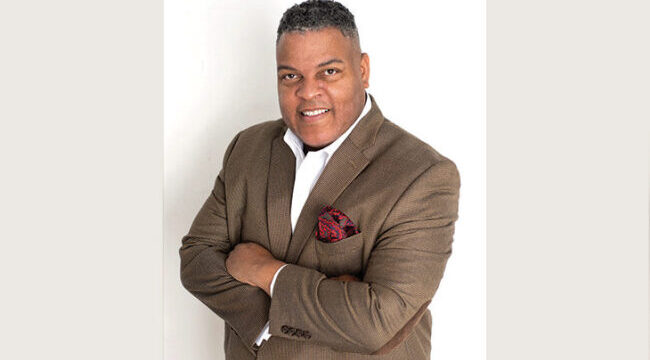
Dr. Anthony O. Kellum – CEO of Kellum Mortgage, LLC Homeownership Advocate, Speaker, Author NMLS # 1267030 NMLS #1567030 O: 313-263-6388 W: www.KelluMortgage.com.
Property is Power! is a movement to promote home and community ownership. Studies indicate homeownership leads to higher graduation rates, family wealth, and community involvement