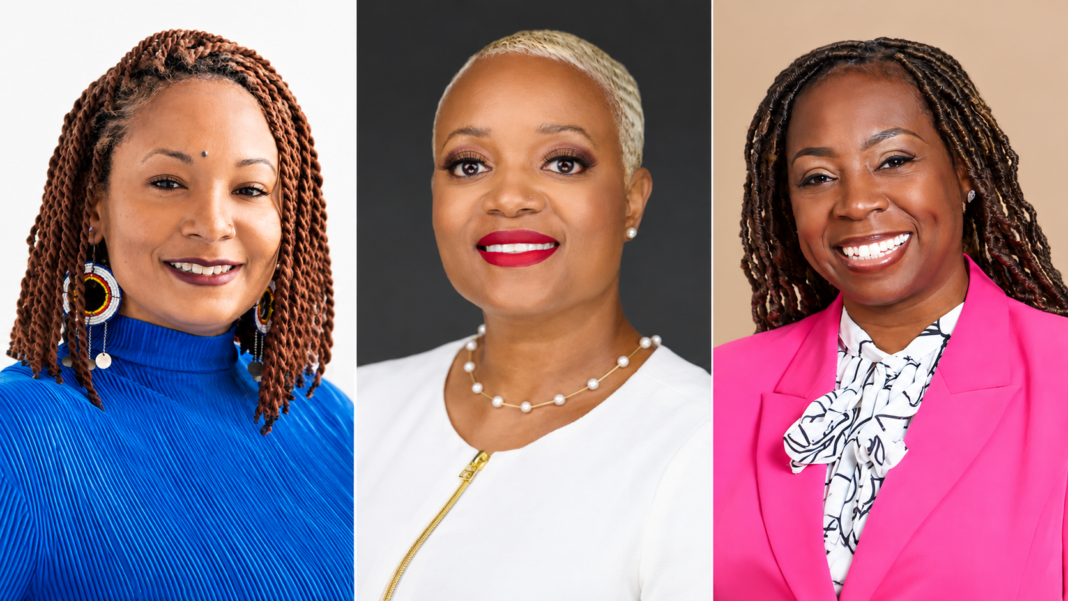

By Angela K. Waller, Elevated Survivorship; Shonta Chambers, Patient Advocate Foundation; Ariel J. Thomas, Manifest Vision Partners
Here’s a transformational idea: everyone should have access to safe, healthy and affordable food.
If this idea doesn’t feel radical to you, then perhaps you haven’t spent much time in the Southside of Chicago and its adjoining suburbs.
Food insecurity is rampant in our neighborhoods. If you live in Washington Heights, you are practically guaranteed to experience lower food access than the average Chicagoan – with similar circumstances in the South Shore, West Englewood or West Pullman.
It has been clearly documented that “Food is Medicine.” In fact, according to countless scientific studies, good nutrition is critical during cancer treatment. It empowers your body to maintain muscle, rebuild damaged tissues and better withstand aggressive radiation or chemotherapy. A patient with access to nutritious food will experience fewer side effects, like fatigue and nausea, and will have less need for extra medicines. In short, good food improves a patient’s daily life.
Instead, though, a Black woman with breast cancer in our South Side neighborhoods or suburbs has the opposite experience. In fact, if “food is medicine,” then we are inarguably in a crisis, and it is disproportionately affecting Black women with breast cancer.
As co-authors of the Pinkprint and members of the Chicago Better Together Breast Cancer Disparities Think Tank, an initiative launched to address the disproportionate impact of breast cancer mortality on Black women in Chicago’s South Side and South Suburbs, we know that by combining data-informed strategies with community-driven advocacy and leadership, we will create equitable, sustainable outcomes for those most affected by breast cancer and the lack of access to nutritious foods in their communities.
Solutions start as local initiatives. We must pilot community-driven solutions in areas with the highest breast cancer mortality rates and limited access to nutritious food.
Existing local programs – food pantries, community fridges and even hospital-run delivery systems – are a critical piece of this local infrastructure. They are just a component, though, of the robust nutrition infrastructure the South Side lacks. In the long-term, our neighborhoods need clean, well-stocked grocery stores – and we must demand that our elected officials do everything they can to attract and retain these food corporations to invest in our communities.
This is just one item on their to-do list. Long-term solutions will include policy changes and targeted incentives at the city, state and federal levels. Just this spring, over 150,000 people in Illinois lost SNAP benefits, a devastating cut with ripple effects across families into entire neighborhoods. These cuts disproportionately affect people in the South Side of Chicago – not to mention, overwhelm food banks and other centers that serve as part of our social safety net. The Families Receiving Emergency Support for Hunger (FRESH) program in Illinois provides a one-time, automatic $400 cash payment per eligible household member to residents who lost their SNAP food benefits. This will help ease the immediate negative effects of these cuts and is much appreciated. But it is not a long-term solution.
When we started conversations in work groups about this project, we started with the idea that Black women deserve equitable access to quality breast cancer care. Any conversation about breast cancer care and goals for improved outcomes, must include a conversation about nutrition justice.
Nutrition justice is not just a transformational ideal: it is an idea that will literally transform our neighborhoods and the quality of life of every single person living in them. It will put grocery stores in empty storefronts; it will deliver food to a breast cancer patient going through chemotherapy.
Nutrition justice will help improve breast cancer outcomes for Black women on Chicago’s South Side. And Black women should not have to wait.
This op-ed is the second in a series focusing on eliminating breast cancer mortality in Black women on Chicago’s Southside. The authors are part of the Chicago Better Together Breast Cancer Disparities Think Tank, an initiative launched to address the disproportionate impact of breast cancer mortality on Black women in Chicago’s Southside and South Suburbs. Together with other community leaders, they have co-authored the Pinkprint, a strategic multistep plan and call-to-action on this critical issue.