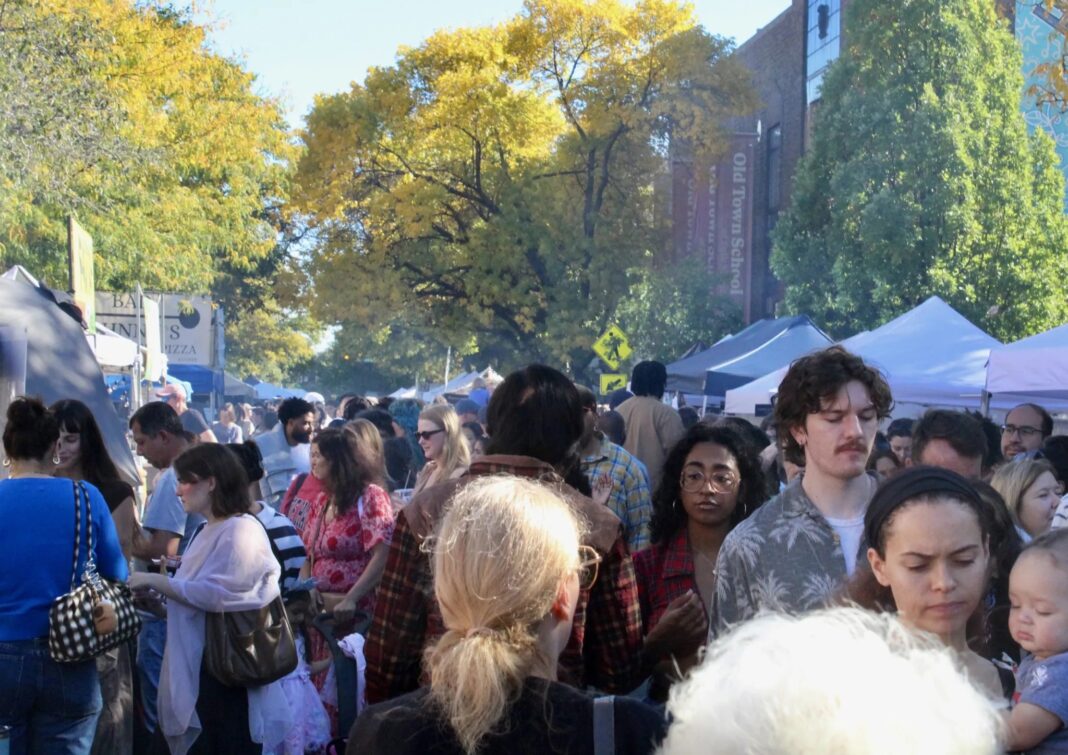

On October 4th, crowds swarmed the once-local Lincoln Square Ravenswood Apple Fest.
Thanks to social media videos romanticizing the experience, tens of thousands of people attended the fest, creating safety hazards like gridlocked streets, shoulder-to-shoulder crowds, and hour-long wait times—turning a beloved northside neighborhood fall outing into an extreme hassle just to get food.
This event has caused public discourse from the following angles:
Has TikTok ruined the novelty of neighborhood fest?
Gone are the days of “if you know, you know.” Nowadays, TikTok and Instagram posts amass hundreds of thousands, sometimes millions, of views, and a fraction of those views convert into out-of-towners showing up at coveted local events that were once under the radar. Chicago locals citywide a neighborhood events have lost their charm because the promotion stretches far and wide. As a result, vendors reported their highest sales in 20 years. Despite crowds leaving a bad taste in locals’ mouths, the silver lining is that vendors now have increased exposure and economic growth.
Chicago talks differently about crowds on the North Side than they do on the South Side
Depending on who is in Chicago crowds, whether they’re mostly white or mostly Black and young, the media tone is very different. Granted, both crowds yield different outcomes; the reality is, one experience is an example of how curated events appeal and resonate with vast demographics, while the other experience, namely the “Teen Takeovers,” shows the lack of intentionality and effort of capable and resourceful event organizers, because clearly there is an audience of young people itching to gather, and dare we say, to gather for productive and fun-loving experiences, too. Our youth deserve better. Meanwhile, northside crowds can be unsafe, yet no one sees it as a threat. Do you recognize the unfairness?
What does better crowd planning look like?
Chicago competes on a global scale, with a population of nearly 9.5 million, and sits at the center of the nation’s economic ecosystem. That said, by 2026, the city should have sophisticated, proactive crowd management systems in place. The Apple Fest is not merely a one-off logistical nightmare. We hope the event reminds urban planners and city officials to ditch passive observation, standard barricades, and reactive police presence. Chicago is long overdue to introduce directional lane splitting (especially on transit platforms) and digital wayfinding in the city’s most densely populated areas to help alleviate chaotic bottlenecks.
In any event, we are living in a time where social media dictates when, where, who, and how individuals gather. The question is, how are cities like Chicago facing the causes of virality “in real life” and in a way that is fair to our most engaged and impressionable demographics?