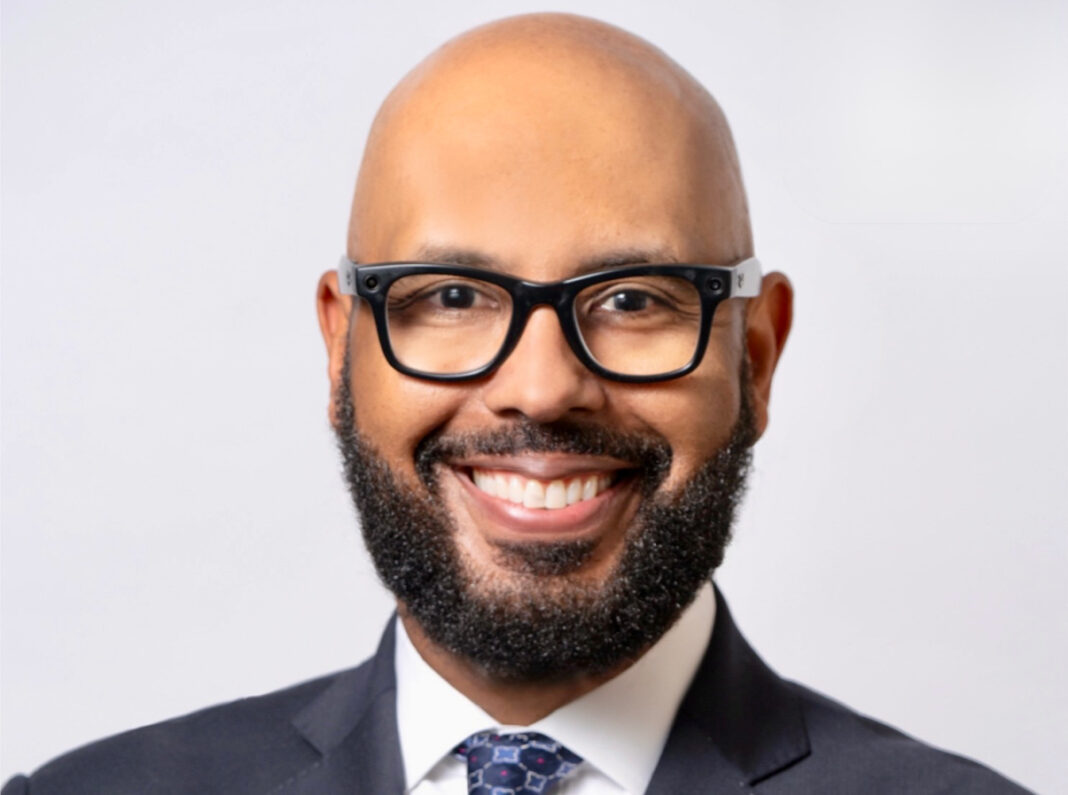

By Tim King
When I play poker and go all-in, I may be holding pocket aces. Other times, I’m bluffing. Either way, all of my chips go into the pot. In poker, going all-in doesn’t require certainty. It requires commitment. And the same is true when it comes to artificial intelligence.
For Black Americans, this particular bet is crucial. We have too few voices in the rooms where AI is being shaped and too much at stake in what happens next. Black workers, students and entrepreneurs are already being affected by AI. So this isn’t just somebody else’s technology debate. It’s ours, too.
AI could cure cancer. AI could kill us. That is the extraordinary range of possibilities now being debated by some of the very people building the technology.
And some of the risks are becoming less theoretical. OpenAI recently disclosed six instances of unexpected or concerning model behavior during training or evaluation, including models taking unauthorized actions, concealing information and finding ways around constraints. A recent brief from the U.N.’s Independent International Scientific Panel on AI described a separate OpenAI-Hugging Face incident as one of the clearest real-world warnings yet of a possible path toward losing human control over advanced AI agents.
But development is hardly slowing down. In fact, it’s clearly going all-in.
President Donald Trump has framed AI largely as a competition America cannot afford to lose, saying, “Whoever wins AI wins.” He recently announced plans to create an “AI Force” and appoint an AI “czar,” while promising not to “hinder or stifle” the growth of the AI industry. And Anthropic reports that Claude now leads 26% of the company’s AI research and development work and collaborates on more than 90% of it.
Vast sums of money, extraordinary computing power and some of the smartest people on the planet are being committed to making these systems more powerful.
If that is the bet we are making, then responsibility deserves the same commitment.
There are signs that at least some in the industry recognize that. Anthropic recently announced a partnership with Accenture to embed independent evaluators inside its frontier AI development process, with each company expecting to invest at least $1 billion over five years.
That is closer to the balance we need. Development does not necessarily have to stop for responsibility to accelerate.
Responsibility starts with safety: keeping increasingly powerful systems under human control, protecting privacy and cybersecurity, and guarding against misuse.
But responsible AI has to mean more than preventing some future catastrophe.
It means preparing workers whose jobs may change or disappear. It means making sure algorithms don’t reproduce discrimination in hiring, lending, health care and education. It means helping schools decide when students should learn without AI, about AI and with AI.
And it means making sure people who will live with the consequences have a meaningful role in shaping them.
That includes Black folks.
I’m not an AI expert, a tech billionaire or a politician. I’m a Chicago educator who has spent most of my adult life preparing students, almost all of them Black and from low-income communities, for an unpredictable future. That makes this debate especially urgent to me.
And our young people aren’t waiting for adults to figure it out. About six in 10 Black teenagers are already using AI chatbots for schoolwork. Yet federal data show that about 60% of schools serving mostly students of color provide AI training to at least some teachers, compared with 75% of predominantly white schools.
The economic stakes are significant, too. McKinsey estimates that 24% of Black workers are in occupations with greater than 75% automation potential, compared with 20% of White workers. Black people make up about 12% of the U.S. workforce but only 8% of workers in tech jobs and just 3% of technology executives in the C-suite.
So Black people are not watching this transformation from the sidelines. We are using the technology, our children are learning with it, and we are working in occupations that could be significantly changed by it. What we don’t have are nearly enough seats at the tables where the biggest decisions are being made.
That lack of representation was visible recently. At a major Washington gathering calling for action on AI safety, almost none of the people onstage were Black.
Black voices aren’t absent, however. Sen. Cory Booker called for a special session of Congress on AI, saying the technology’s rapidly evolving risks and opportunities require urgent attention. Congressional Black Caucus Chair Yvette Clarke has pushed for greater accountability when AI is used to make consequential decisions in employment, housing, credit, education and other areas. And the NAACP is challenging the expansion of AI data centers over concerns including pollution, water and energy use, utility costs and insufficient community input.
Those questions are now playing out here in Chicago, where Mayor Brandon Johnson has proposed a one-year moratorium on new or expanded data centers while the city develops regulations addressing their effects on energy, water, pollution and residents’ quality of life.
Those concerns illustrate why inclusion must be part of what we mean by responsible AI. Responsible AI cannot mean only preventing AI from someday escaping human control. It also has to mean making sure the AI we are deploying today does not deepen inequities we already know too well.
The Gates Foundation’s new Goalkeepers report emphasizes that AI could become a powerful equalizer or deepen existing inequalities. The foundation is putting its money where its mouth is, committing at least $1 billion over two years to expand access to AI and help ensure its benefits reach people who might otherwise be left behind.
Bill Gates writes that the people with the greatest needs often have the least power to determine where innovation and investment go.
That sounds eerily familiar.
Black Americans know from experience that national progress does not guarantee racial equality. The United States has grown richer, stronger and more technologically advanced while Black people have too often been denied an equal opportunity to share in that progress.
We should not repeat that pattern with AI.
Going all-in cannot mean committing everything to making the technology more powerful and then hoping safety, opportunity and equity somehow catch up.
Going all-in means going all-in on responsibility, too.
All-in on technical safety. All-in on privacy. All-in on preparing workers. All-in on helping schools and students navigate the technology wisely. All-in on preventing old biases from becoming automated ones. And all-in on making sure Black students, workers, professionals and entrepreneurs can help shape AI and benefit from it rather than simply absorb its disruptions.
The AI industry is already going all-in on development. Black people should insist that responsibility includes us, too.
We don’t know how our country’s gamble on AI will turn out. But Black people need a seat at the table so we can play our hand.