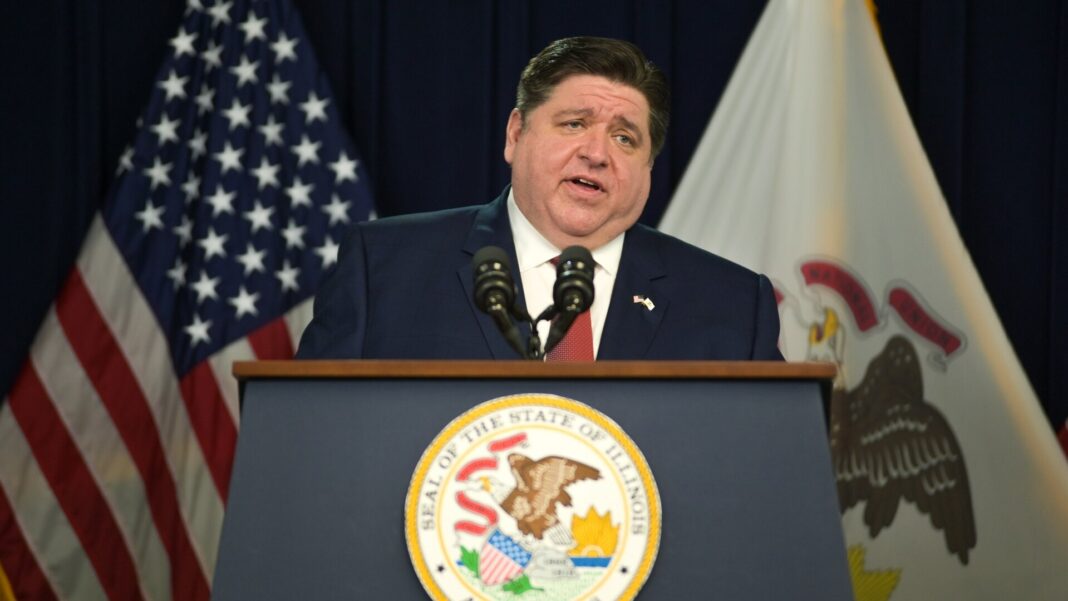

Illinois Gov. JB Pritzker is using his considerable personal wealth to expand his political influence beyond Illinois, directing nearly $40 million toward Democratic candidates and organizations nationwide as the November 3 midterm elections approach.
The billionaire governor’s investments have reached competitive political battlegrounds, including Michigan and Georgia, where Democrats are working to secure key statewide victories.
According to reporting by CNN, Pritzker has contributed nearly $40 million to Democratic candidates and political groups during the midterm election cycle, financing efforts ranging from congressional campaigns to state-level political organizations.
His growing financial involvement comes as speculation continues about whether he will seek the Democratic presidential nomination in 2028.
In Georgia, Pritzker is directing $1 million toward efforts supporting Democratic gubernatorial nominee Keisha Lance Bottoms, according to the Atlanta Journal-Constitution.
Bottoms faces Republican Rick Jackson in a closely watched contest that has attracted substantial outside financial support.
Michigan is another critical battleground, where Democrat Abdul El-Sayed and Republican Mike Rogers are competing for the U.S. Senate seat being vacated by retiring Sen. Gary Peters.
The outcome of that race could influence control of the Senate, making Michigan an important target for national political spending.
Pritzker’s contributions reflect a broader strategy of strengthening Democratic organizations and supporting candidates in states where election outcomes could have national consequences.
The governor has also invested heavily in his own reelection campaign against Republican Darren Bailey.
Campaign finance reports show that Pritzker’s campaign spent approximately $23.8 million between July and September, compared with roughly $941,000 spent by Bailey’s campaign during the same period.
The substantial financial advantage underscores Pritzker’s ability to fund both his political ambitions in Illinois and Democratic campaigns elsewhere.
His expanding role has also renewed debate about the influence of wealthy individuals in American elections.
Supporters argue that major political contributions help candidates compete against well-financed opponents and strengthen party organizations.
Critics question whether the growing reliance on wealthy donors gives a relatively small number of individuals disproportionate influence over political priorities.
Pritzker, whose fortune comes from the family behind the Hyatt hotel empire, has become one of the Democratic Party’s most prominent financial supporters.
Although he has not announced a presidential campaign, his national political investments are helping build relationships with candidates, party leaders and organizations across the country.
For Illinois voters, the spending illustrates how their governor’s political influence increasingly extends beyond state borders.
As Election Day approaches, Pritzker’s contributions could help shape competitive races while strengthening his position within the Democratic Party.
Whether that influence ultimately leads to a presidential campaign remains uncertain, but his financial involvement has already made him a major force in the 2026 midterm elections.