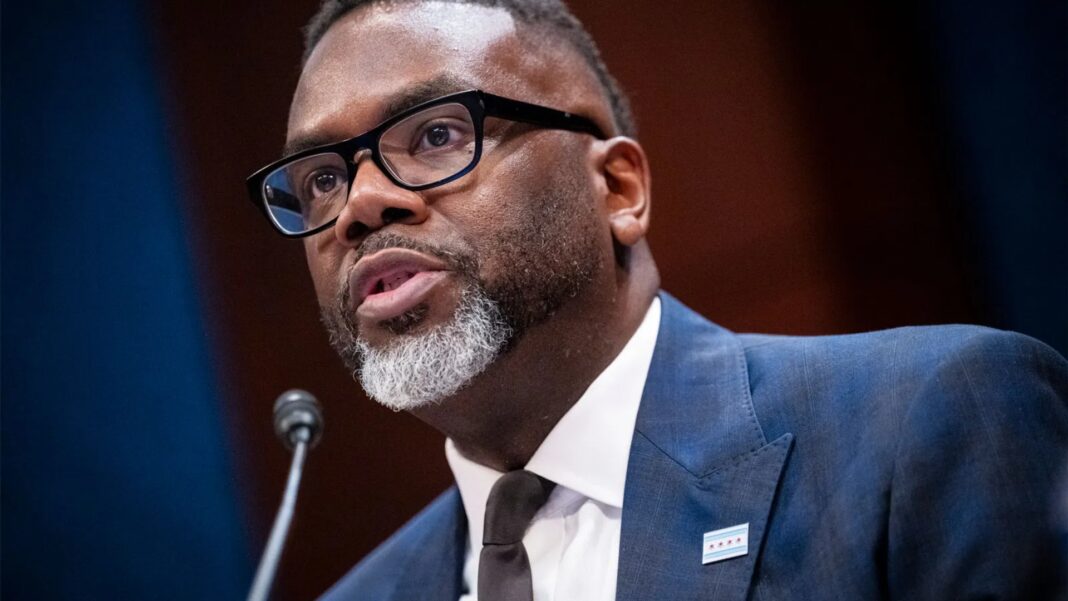

Chicago Mayor Brandon Johnson has formally launched his bid for a second term, submitting approximately 33,000 petition signatures Friday as the race for City Hall intensifies ahead of the February 23, 2027, mayoral election.
Johnson’s filing marks the official beginning of what is expected to be a highly competitive reelection campaign, with several prominent challengers seeking to unseat the city’s first-term mayor.
Among his leading opponents is Illinois Secretary of State Alexi Giannoulias, who reportedly submitted approximately 60,000 petition signatures and enters the race with a substantial fundraising advantage. U.S. Rep. Mike Quigley and businessman Willie Wilson are also seeking the office.
Johnson, who was elected in 2023 with strong support from organized labor and progressive voters, is campaigning on his administration’s investments in public education, affordable housing, public safety and mental health services.
His reelection effort comes at a challenging moment for Chicago, where debates over the city’s finances, public safety and economic development have shaped much of his first term.
The mayor has faced criticism over budget proposals, relationships with City Council members and his handling of the Chicago Public Schools system. Supporters, meanwhile, credit his administration with prioritizing working families, neighborhood investment and expanded access to social services.
The emerging contest could become particularly consequential in Chicago’s predominantly Black neighborhoods, where voters have historically played a decisive role in mayoral elections.
Johnson’s ability to maintain support among Black voters while rebuilding the broader coalition that elected him will be central to his path toward a second term.
Giannoulias enters the race with significant name recognition and financial resources, while Wilson has previously demonstrated an ability to attract support among Black voters, particularly on the South and West sides.
Chicago’s nonpartisan mayoral election system requires a candidate to receive more than 50% of the vote to win outright. If no candidate reaches that threshold in February, the two leading candidates will advance to a runoff election in April.
For Johnson, the months ahead will offer an opportunity to make the case that his administration deserves additional time to deliver on its priorities.
For his challengers, the campaign presents an opening to argue that Chicago needs a different approach to addressing its most pressing challenges.
With the field taking shape, voters will soon face a consequential decision about the city’s leadership and its direction over the next four years.