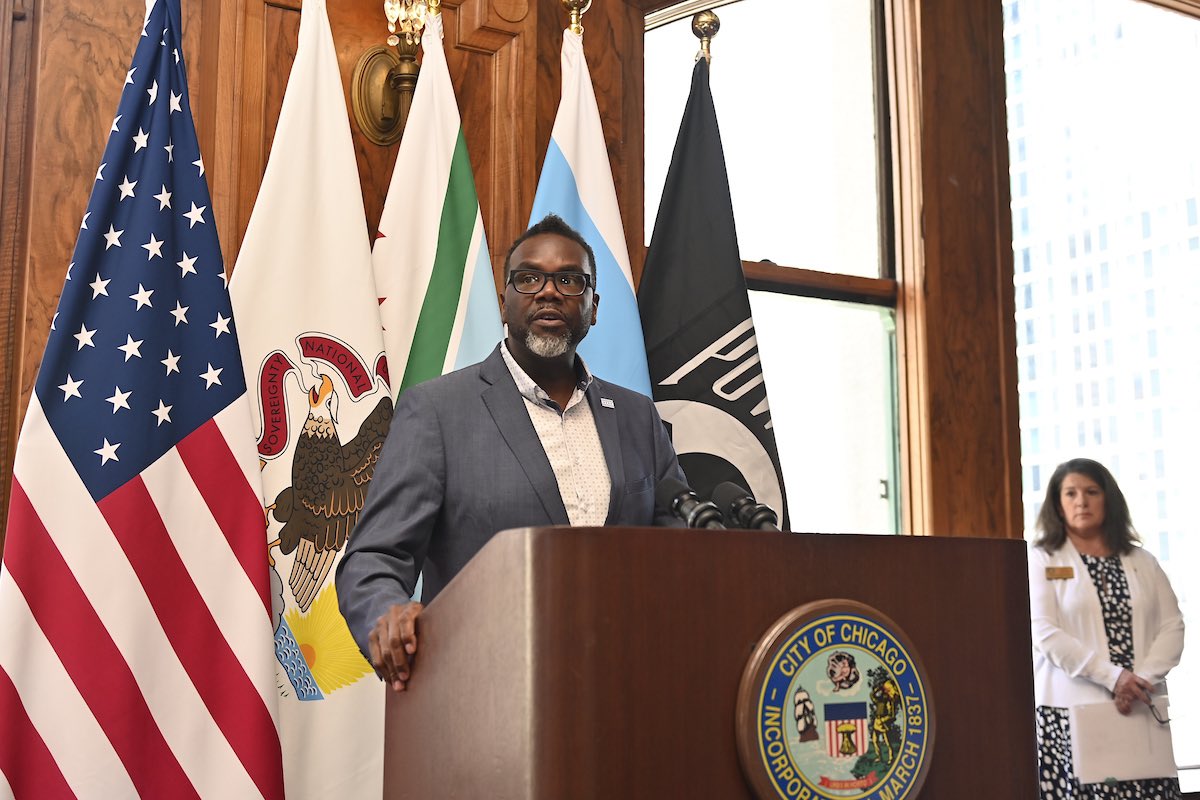

Chicago Mayor Brandon Johnson is proposing a $17.6 billion city budget for 2027 that would rely on new business taxes and hundreds of millions of dollars in borrowing to address the mounting cost of police misconduct settlements, setting up another difficult budget debate at City Hall.
The proposal comes as Chicago faces an estimated $882 million budget deficit. Johnson’s spending plan would avoid a property tax increase, major layoffs and cuts to city services, but several of its revenue proposals are already facing resistance from aldermen who rejected similar measures last year.
Among the most consequential elements is a proposal to borrow $481 million to cover legal settlements stemming from allegations of police misconduct. Those costs have become a growing burden on city finances, forcing Chicago to confront the long-term financial consequences of wrongful convictions, police abuse and other alleged misconduct.
The borrowing would include funding for a $260.8 million settlement involving 17 men who spent a combined 383 years behind bars after being coerced into confessing to crimes by former Chicago police Detective Reynaldo Guevara. The settlements represent one of the most expensive chapters in the city’s history of police accountability failures.
According to WTTW News, Chicago has already spent more than $277 million in 2026 resolving police misconduct lawsuits. The administration says borrowing would provide temporary financial relief, although the approach would also create repayment obligations in future city budgets.
Johnson’s proposal would also revive a controversial tax on large employers. Under the plan, businesses with more than 125 full-time employees would pay $25 per employee each month. The administration has proposed rebates for qualifying businesses in economically disadvantaged areas, including portions of the South and West Sides.
The mayor argues that large corporations should contribute more toward maintaining city services and addressing Chicago’s financial challenges. Opponents contend that additional business taxes could discourage hiring and investment at a time when the city is working to strengthen its economy.
The proposed budget also includes higher taxes on certain services and transactions, including cloud computing and sports betting. Those measures would require City Council support before taking effect.
For residents, the debate reaches beyond how Chicago balances its books. The outcome could influence neighborhood services, employment opportunities and the city’s ability to meet its obligations without shifting additional costs onto working families.
The police settlement proposal presents a particularly difficult question. Chicago must compensate people harmed by misconduct while continuing to fund public safety, housing, transportation and other essential services. Borrowing may ease the immediate pressure, but it does not resolve the underlying conduct that has produced costly lawsuits for decades.
Johnson is expected to formally present his spending plan to the City Council on Wednesday, October 21. Aldermen must ultimately negotiate and approve a budget before the end of the year.
With opposition already building around the proposed employer tax, the mayor faces a significant challenge in securing enough votes for a plan that attempts to balance financial stability with his administration’s commitment to economic equity.