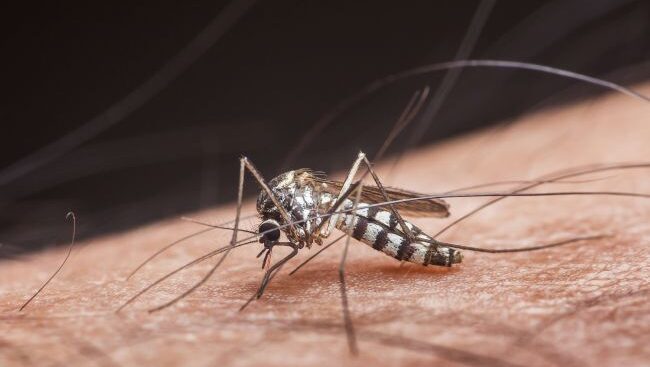

Cook County Department of Public Health has reported the first four cases of West Nile virus in suburban Cook County this season. All four cases were identified in adults. CCDPH is encouraging residents to take precautions to prevent West Nile Virus.
West Nile virus occurs in humans when they are bitten by mosquitoes that contracted the virus by feeding on infected birds. As of the week ending Aug. 22, the risk of human West Nile virus infection is high. The Illinois Department of Public Health on Wednesday reported the state’s first human case of West Nile virus, involving a resident of Piatt County.
Last year, 44 total cases of West Nile virus, and four deaths, were reported in suburban Cook County.
Across Illinois, West Nile virus activity increased significantly in 2025 compared to 2024. The state reported 150 confirmed human cases in 2025, more than double the 69 cases reported in 2024. Ten deaths were reported in 2025, compared with 13 deaths the year before.
Many people infected with West Nile virus have no symptoms and do not become ill. However, some people may develop mild symptoms such as fever, headache, rash, and body aches three to 15 days after infection.
More severe symptoms are called neuroinvasive, meaning the virus has affected the nervous system, including the brain or spinal cord. These symptoms can include high fever, stiff neck, confusion, muscle weakness, and inflammation of the brain, which may result in permanent neurological damage or death.
“In light of high West Nile virus activity in Cook County, it is incredibly important for people to protect themselves from mosquito bites,” said Dr. Kiran Joshi, chief operating officer of Cook County Department of Public Health. “Using insect repellent, wearing long sleeves and pants, and eliminating standing water around your home can help protect you from mosquito bites.”
In June, Cook County Department of Public Health launched its annual “Fight the Bite” public awareness campaign to encourage residents to take precautions against West Nile virus.
Fight the Bite encourages four simple steps to reduce the risk of infection:
1. Use EPA-registered insect repellent.
Repellents containing 20% to 50% DEET are effective for adults. Child-friendly repellents containing 20% to 30% DEET are sufficient for children.
2. Eliminate standing water around your home.
Empty flowerpots, old tires, buckets, birdbaths, and plastic wading pools where mosquitoes can breed.
3. Repair damaged window and door screens.
Make sure screens fit tightly and do not have holes or gaps.
4. Take extra precautions at dawn and dusk.
Mosquito activity is often greatest during these times. Consider limiting outdoor activities when possible.
To learn more about West Nile virus prevention, visit FightTheBiteCookCounty.com.