
By: Jasmine West
Clarence B. Jones understood that words could move a nation, but only if they were tied to courage, strategy, sacrifice, and the relentless demand for justice.
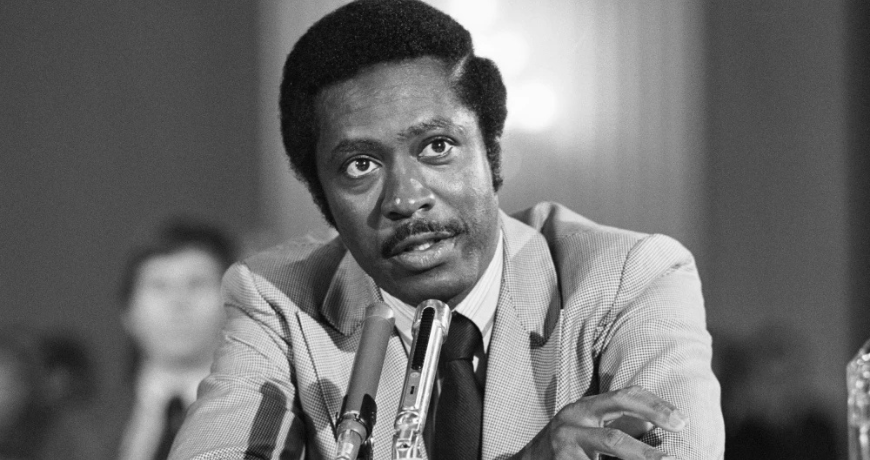
Jones, the civil rights lawyer, speechwriter, activist, and trusted adviser to the Rev. Dr. Martin Luther King Jr., died Friday, May 22, 2026, at a senior living community in Cupertino, California. He was 95. His death closes another chapter in the living memory of the Civil Rights Movement, yet his work remains deeply present in every fight over voting rights, racial justice, free speech, and Black political power.
For many, Jones’ name will forever be linked to King’s “I Have a Dream” speech, delivered at the 1963 March on Washington before more than 250,000 people gathered at the Lincoln Memorial. Jones helped shape portions of that historic address, including the legal and moral framework that called America to account for a promise it had never fully kept to Black people. He was also one of the organizers of the march, a defining moment that helped build momentum for the Voting Rights Act of 1965.
Yet reducing Jones to a speechwriter would miss the depth of his life’s work. He was King’s lawyer. He was a strategist. He was a fundraiser for the Southern Christian Leadership Conference. He was one of the people King trusted during some of the most dangerous and consequential years of the movement.
When King was jailed in Birmingham, Alabama, in 1963, Jones helped smuggle out what became “Letter from Birmingham Jail,” one of the most enduring moral documents of the Civil Rights Movement. King’s words in that letter challenged the nation’s comfort with gradualism and laid bare the cost of waiting for justice from systems built to delay it.
Jones also helped defend King in 1960 when Alabama officials brought tax evasion charges against him, a case many civil rights leaders viewed as an effort to weaken the movement by imprisoning its most visible leader. He later played a role in the landmark 1964 Supreme Court case New York Times v. Sullivan, which strengthened press protections by requiring public officials to prove “actual malice” in defamation cases involving news coverage.
Born Jan. 8, 1931, in Philadelphia, Jones was the son of working-class parents, a chauffeur and a maid. He graduated from Columbia College in 1953, served in the Army, then earned his law degree from Boston University in 1959. Before joining King’s inner circle, he worked as an entertainment lawyer in California, moving among figures like Harry Belafonte, Sammy Davis Jr., and Frank Sinatra.
His path changed in 1960 when he joined King’s legal team. From that point forward, Jones became part of the machinery behind a movement that reshaped American democracy.
After King’s assassination in 1968, Jones continued breaking ground. He became the first Black allied member of the New York Stock Exchange and later became principal owner and publisher of The New York Amsterdam News, one of the nation’s most significant Black newspapers. His commitment to the Black press carried the same understanding that shaped his work with King: Black communities needed institutions capable of telling the truth about power, policy, and survival.
Jones later taught at Stanford University and the University of San Francisco, where he co-founded the Institute for Nonviolence and Social Justice. In 2024, President Joe Biden awarded him the Presidential Medal of Freedom, the nation’s highest civilian honor.
Even in his final years, Jones did not retreat from public life. He continued warning against efforts to weaken Black voting power and roll back civil rights gains. Just weeks before his death, he criticized President Donald Trump’s push around congressional redistricting, calling attention to the political danger of attempts to dilute Black representation.
Rev. Al Sharpton remembered Jones as “a brilliant strategist, lawyer, author, and philanthropist,” adding that many civil rights leaders owed him “a great debt.”
Jones was also the subject of a recent documentary, The Baddest Speechwriter in the World, directed by Golden State Warriors star Stephen Curry and Oscar-winning filmmaker Ben Proudfoot. The film introduced his story to a new generation at a moment when the lessons of the Civil Rights Movement remain urgent.
Clarence B. Jones leaves behind five children and his longtime partner, Lin Walters. He also leaves behind a record of service that cannot be separated from the ongoing struggle for Black freedom.
His life reminds us that movements are never carried by one voice alone. Behind the speeches that define history are the organizers, lawyers, strategists, writers, fundraisers, and truth-tellers who help make those words possible. Jones was one of them. He stood close enough to history to help write it, and long enough to remind America that the dream was never meant to stay a dream.