



Chicago Public Schools’ effort to improve educational outcomes for Black students entered a new phase Thursday, November 12, as a long-awaited oversight committee began examining how the district intends to turn its Black Student Success Plan into measurable results.
The Black Student Achievement Committee held its inaugural meeting nearly three years after Illinois lawmakers required its creation. The committee is responsible for monitoring a five-year initiative designed to address longstanding disparities in academic achievement, student discipline, access to educational opportunities and the representation of Black educators.
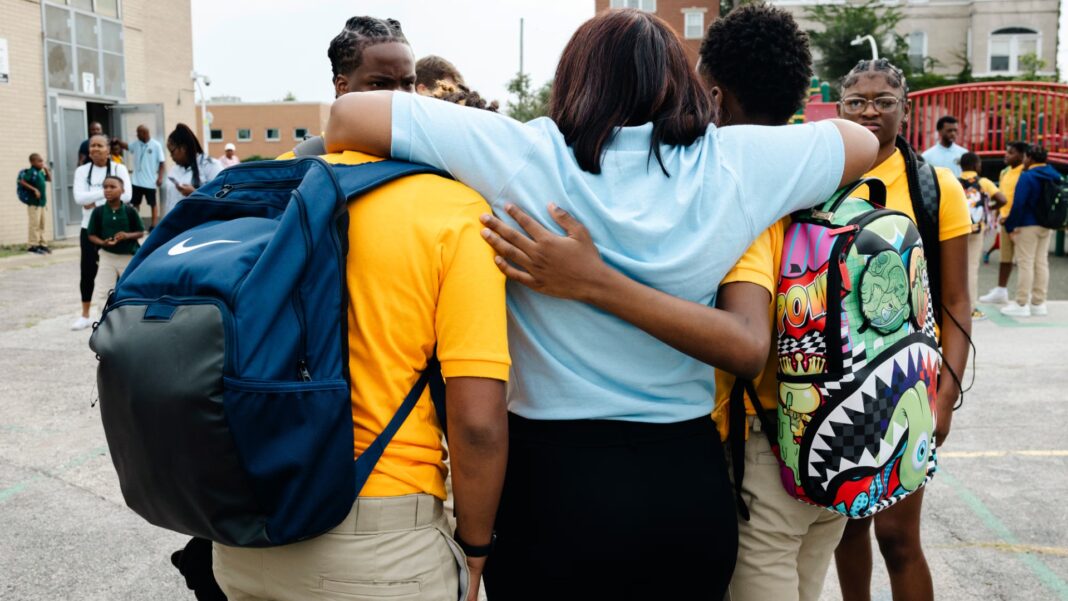
Black students account for roughly one-third of CPS enrollment, making the plan a significant part of the district’s broader responsibility to improve educational opportunities.
Introduced in February 2025, the initiative calls for culturally responsive instruction, stronger family engagement, expanded student leadership opportunities and improved recruitment and retention of Black teachers. Its implementation, however, has drawn criticism from advocates frustrated by delays and the absence of clear measures demonstrating progress.
Thursday’s meeting brought those concerns into sharper focus.
Committee members questioned how CPS would evaluate academic improvement, protect funding during district budget reductions and ensure students attending neighborhood schools have a meaningful voice in the process.
The discussion also examined whether individual school improvement plans should incorporate Black student success goals, a step that could connect the districtwide initiative more directly to classroom practices and school leadership.
Eugene Robinson Jr., CPS’ director of Black student success, outlined work already underway, including efforts to support Black student unions, strengthen partnerships and develop strategies for recruiting Black male educators.
Those initiatives represent early implementation efforts, but the committee’s larger responsibility will be determining whether they produce sustained improvements in student experiences and educational outcomes.
The committee’s launch comes amid significant financial and political uncertainty. CPS continues facing budget pressures, while the Trump administration has challenged the district’s race-conscious student success initiative. Federal officials previously withheld magnet school funding in connection with the dispute, prompting legal action that resulted in the funding being restored.
The oversight committee must also navigate changes in school board leadership. Jitu Brown, a longtime education advocate who helped guide the committee’s formation, lost his reelection bid earlier this month. A new board member is expected to assume a committee leadership role when Chicago’s fully elected school board takes office in January.
The transition adds urgency to questions about continuity, public accountability and the resources necessary to carry out the plan.
Community advocates have emphasized that success cannot be measured simply by establishing committees or launching programs. Improvements in reading and mathematics, access to advanced coursework, fair disciplinary practices and stronger student support systems will ultimately determine whether the initiative delivers on its commitments.
The committee is expected to continue its oversight work in 2027, providing a forum for examining district progress and identifying areas requiring additional attention.

