


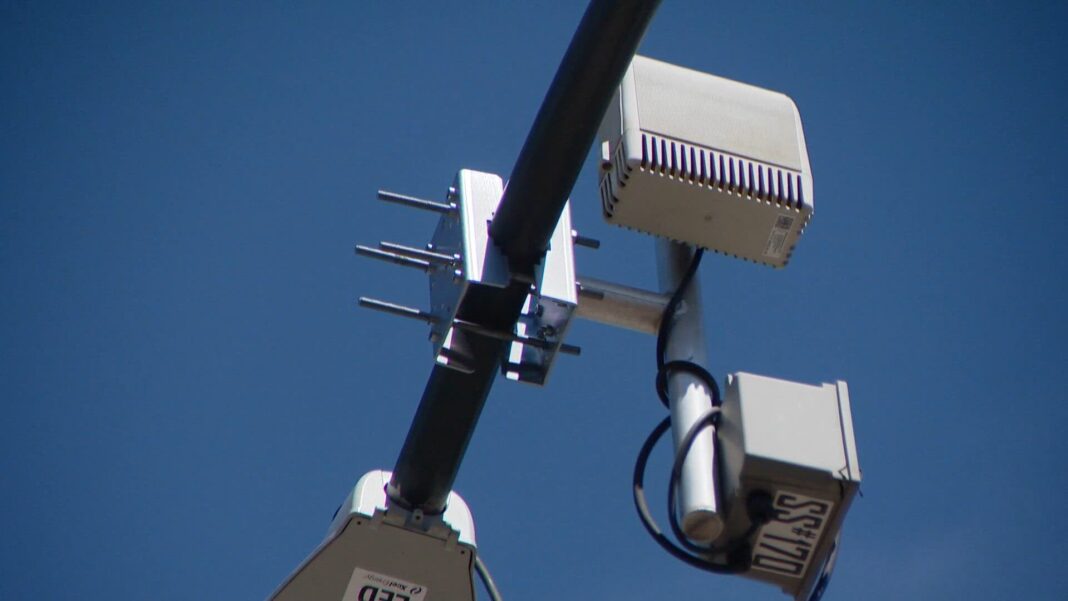

Chicago voters will weigh in Tuesday on whether the city should restore gunshot detection technology, reopening a debate over public safety, police response times and the use of surveillance technology in neighborhoods disproportionately affected by gun violence.
The November 3 ballot includes a nonbinding question asking whether Chicago should restart technology that automatically alerts first responders when gunfire is detected. The vote comes as Mayor Brandon Johnson’s administration prepares to test alternative systems in six South and West Side police districts, more than two years after discontinuing the city’s contract with ShotSpotter.
The timing places two separate developments at the center of Chicago’s public safety debate: a citywide vote on the future of gunshot detection and an administration-led pilot program whose operational details remain limited.
Chicago ended its ShotSpotter contract in September 2024. The technology used acoustic sensors to identify suspected gunfire and notify police, including in situations where no one called 911.
Supporters argued that the system helped officers locate shooting scenes, recover evidence and reach victims who might otherwise go unnoticed. Critics questioned its reliability, effectiveness and potential to generate unnecessary police encounters in predominantly Black and Latino neighborhoods.
Johnson defended the decision to discontinue ShotSpotter, arguing that the city needed to invest in approaches supported by stronger evidence. The administration subsequently sought proposals for replacement technology, receiving bids from nine companies.
That process has yet to produce a permanent replacement.
On October 20, city Chief Procurement Officer Sharla Roberts informed alderpeople that Chicago was preparing a pilot program to evaluate public safety technologies, including gunshot detection systems. The testing is planned for the Wentworth, Calumet, Englewood, Deering, Ogden and Harrison police districts.
Those districts cover portions of Chicago’s South and West sides, where the effects of gun violence and the city’s public safety strategies have been subjects of sustained community debate.
According to city officials, the six-month pilot is intended to assess effectiveness, reliability, privacy protections and operational performance before any longer-term investment.
But questions remain about when testing will begin, which vendors will participate and how the city will determine whether the technology is successful.
During an October 28 City Council budget hearing, senior public safety officials offered few additional details about the pilot. Acting Chicago Police Superintendent Fred Waller acknowledged that he wanted more information about the initiative.
The uncertainty has frustrated alderpeople who have pressed the administration to move forward with replacement technology.
A City Council committee has advanced an ordinance that would require the administration to award a gunshot detection contract within 30 days of the measure’s passage. The ordinance still requires approval by the full council.
The renewed debate also comes amid competing interpretations of the evidence surrounding gunshot detection systems.
Supporters emphasize situations in which gunfire goes unreported, arguing that automatic alerts can help police identify victims and respond to emergencies.
Opponents point to questions about false alerts, the limited number of investigations producing evidence of gun crimes and the potential for unnecessary police stops.
Chicago’s experience also illustrates the difficulty of separating the effects of a single technology from broader crime trends. Homicides declined substantially in 2025, the first full year after ShotSpotter was discontinued. But that decline alone does not establish whether removing the system improved or worsened public safety.
The same limitation applies to individual incidents in which emergency assistance was delayed. Such cases raise important questions about how shootings are detected and reported, but they do not independently establish that a gunshot detection system would have prevented a particular injury or death.
For residents of neighborhoods where gun violence remains a concern, the practical questions extend beyond the technology itself.
Would a new system help emergency responders locate victims more quickly? How would police verify alerts before responding? What safeguards would prevent unnecessary encounters? And would the city publicly release data showing whether the pilot improved outcomes?
Those questions could become central to evaluating the administration’s proposed testing program.
Tuesday’s advisory referendum will not require Chicago to restore ShotSpotter or purchase another system. The city must still make decisions about vendors, costs, deployment and oversight.
Nevertheless, the vote will provide a citywide measure of public sentiment as Chicago considers whether gunshot detection technology should again become part of its public safety infrastructure.
With the pilot approaching and the City Council continuing to press for action, the debate is moving beyond whether Chicago should use the technology to how the city would measure its effectiveness and protect the communities where it is deployed.

