


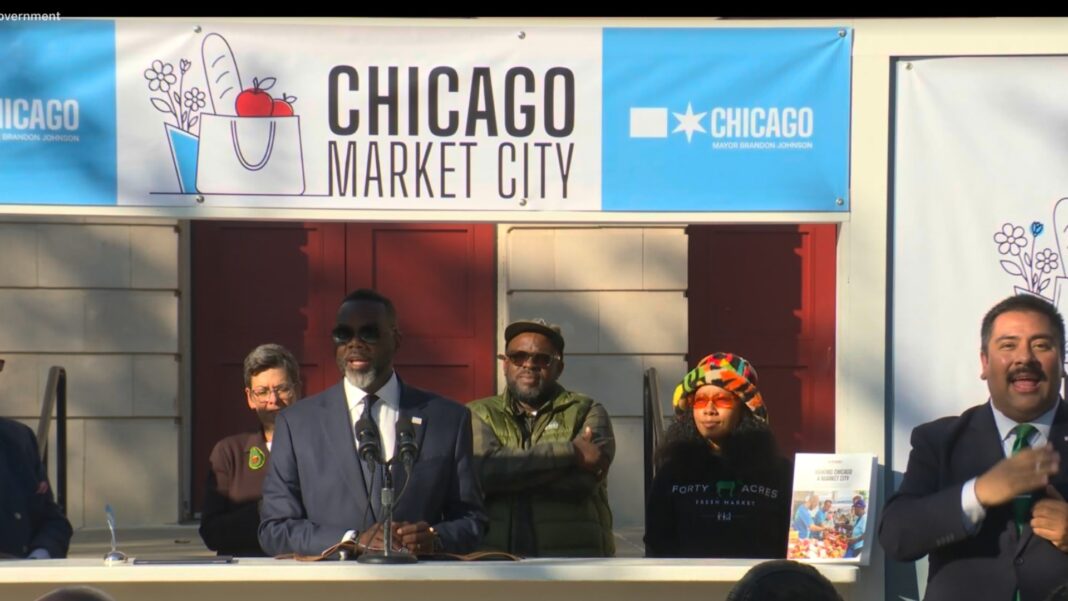

In neighborhoods across Chicago’s South and West sides, the disappearance of grocery stores has left families traveling farther, spending more and facing fewer options for fresh, affordable food. Now, city leaders are proposing a new approach to a problem that has persisted for decades: bringing year-round public markets directly into communities that have long struggled with limited grocery access.
Mayor Brandon Johnson’s administration announced the Market City Action Plan on October 22, outlining a strategy to establish permanent indoor public markets, strengthen existing farmers markets and create new opportunities for neighborhood food businesses.
The proposal seeks to address one of Chicago’s most persistent economic and public health challenges while expanding opportunities for local entrepreneurs.
According to research from the Greater Chicago Food Depository, 51% of households on the South Side and 45% on the West Side experience food insecurity. The rate reaches 41% on the Southwest Side.
Those figures underscore the challenges facing families who must navigate rising food prices, limited transportation options and the continued loss of neighborhood grocery stores.
The administration’s announcement follows another setback in Chicago’s efforts to improve food access.
Earlier this year, Yellow Banana closed seven Save A Lot locations on the South and West sides, disrupting an initiative that had received city support to expand grocery options in underserved communities.
The closures renewed questions about whether traditional supermarket development alone can provide sustainable solutions.
Rather than relying exclusively on large grocery chains, the city’s new strategy would build on Chicago’s network of farmers, independent food businesses, market operators and community organizations.
That approach could also create opportunities for Black-owned businesses and neighborhood entrepreneurs who often face barriers to securing affordable commercial space and accessing capital.
Johnson signed an executive order establishing a committee of city officials and community representatives to help guide the initiative. Aaliayah Romer has been appointed the city’s manager of food equity and will play a role in implementation.
The city has also announced $450,000 in neighborhood market grants intended to support existing grocers and market operators.
Officials expect to issue a public request for information in November to identify potential market locations and operators.
Several questions remain, including how many markets will ultimately open, where they will be located and how their construction and ongoing operations will be funded.
The administration anticipates that expanded support for existing farmers markets could begin during the 2027 season, while permanent indoor facilities would require additional planning and investment.
For residents who have watched grocery stores close and food options disappear, the success of the initiative will depend on more than new market locations. Affordability, consistent availability and convenient access will determine whether the plan delivers meaningful improvements.
Chicago’s challenge is not simply attracting another food retailer. It is creating a dependable neighborhood food system that serves residents, supports local businesses and remains viable for years to come.

