
The truth younger activists are living and older generations must acknowledge
As we honor the life and legacy of Dr. Martin Luther King Jr., it feels necessary to move beyond nostalgia and confront the present. The marches, speeches, and iconic images we revisit each January often soften the reality of what activism truly costs. Today, that cost feels sharper, more personal, and far more dangerous than many are willing to admit.
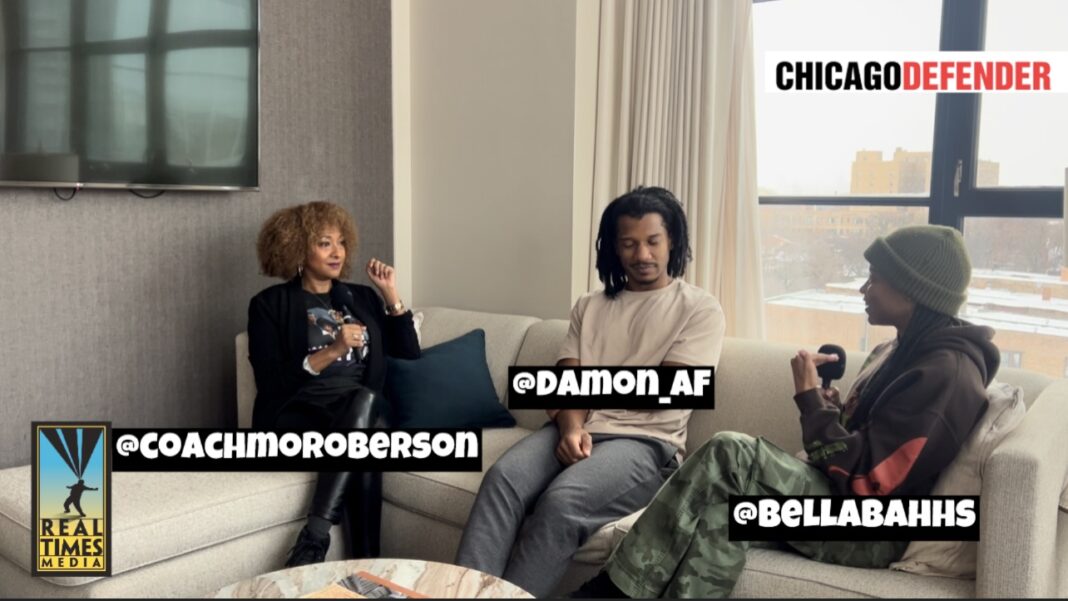
I recently sat down with Damon A. Williams and Bella Bahhs, two voices who understand this reality not as theory, but as lived experience. Both are in their thirties now, but activism did not arrive in adulthood for them. It found them early. They have been marching, organizing, activating, and creating long before resistance became optimized for algorithms.
When I asked Bella what activism means in this moment, her response was immediate and unflinching. One word.
Dangerous.
“Anything that you do right now could land you in front of a federal judge or staring down the weapon of a federal officer,” she said.
The room went quiet, not because the statement was shocking, but because it was accurate.
The first question I posed to both Damon and Bella was one that carries weight across generations: What do you want the older generation to know from you?
What they shared challenged a common misconception. There is a belief that younger generations have it easier. That access to technology equals access to opportunity. That visibility equals power. What they described instead is a new generation of struggle, shaped differently, but no less heavy.
They are showing up not because things are comfortable, but because something new is trying to be born.
We are living inside a version of disparity that looks different from decades past, yet remains deeply destabilizing. Prices are out of control. Wages have not kept pace. Access to healthcare remains limited. There is little room to control personal or economic growth. Layered over it all is the quiet reshaping of the mind, influenced not by community, but by algorithms. What we call social networking is often neither social nor connective. It is curated, monitored, and profit driven.
Both Damon and Bella spoke to the younger generation’s intense desire to be seen and heard, and how that desire itself has become dangerous. Visibility now comes with surveillance. Expression comes with consequences. Damon emphasized the importance of encouraging young people to create content with meaning, not just virality. At the same time, he acknowledged a sobering truth: there are fewer spaces for genuine social connection.
Many of us grew up with community centers, block parties, church basements, and shared rituals that grounded us. The year 2020 accelerated technology but wiped out much of the physical culture of community that once sustained us. What remains is isolation masked as connection.
During our conversation, I reflected on the deep respect I have for the work Damon and Bella did on the streets during the George Floyd movement and long before dating back to Mike Brown, Sandra Bland, Eric Garner and countless others that lost life to the hands of those meant to protect us. I also took time to honor Kristiana Colon for her brave, trailblazing activism and the powerful sit outs she and Damon organized. Those moments were not symbolic. They were intentional, disruptive, and carried real risk.
What stood out most was how both Damon and Bella are evolving their activism now. Not retreating, but expanding.
Both have turned toward creative expression as a way to spread their message beyond protest lines and into broader spaces, without placing their bodies directly in harm’s way. It is activism that travels.
Damon is focused on collaboration with other creatives through Respair Media, while continuing the work of Let Us Breathe Collective and the Black Voters Project Chicago. Alongside that work, he is stepping fully into a new chapter in music. Bella continues to sharpen her voice through her writing in The Revolutionary Column with The Triibe, a platform she launched in response to the January 6 events and has sustained for six years as a commitment to truth telling. Most recently, her voice has extended into conversation with Chicago’s newest mayor and into music with her new song Too Blessed, where her poetic and literary skill meets rhythm and resistance.
This is what modern day activism looks like. It is layered. It is strategic. It is creative. And it is dangerous.
As we reflect on Dr. King’s legacy, we must resist the urge to freeze activism in black and white photographs. The work is still alive. The risks are real. And the voices rising now are not disengaged, entitled, or confused. They are navigating a terrain far more complex than many of us ever had to imagine.
The question is not whether they are doing enough.
The question is whether we are listening closely enough to understand the cost.
See the full interview on the Chicago Defender Youtube Channel and spread the word for others to watch!
—
For more on Damon A. Williams (@Damon_Af)
http://Letusbreathecollective.com
http://www.youtube.com/@damona.williams5359
Socials:
@respairmedia
@letusbreathe773
@blackvoterprojectchi
For more on Bella Bahhs (@bellabahhs)
Too Blessed Song
https://unitedmasters.com/m/too-blessed-3
For more on Coach Mo: Monique Roberson
(@coachmoroberson)